
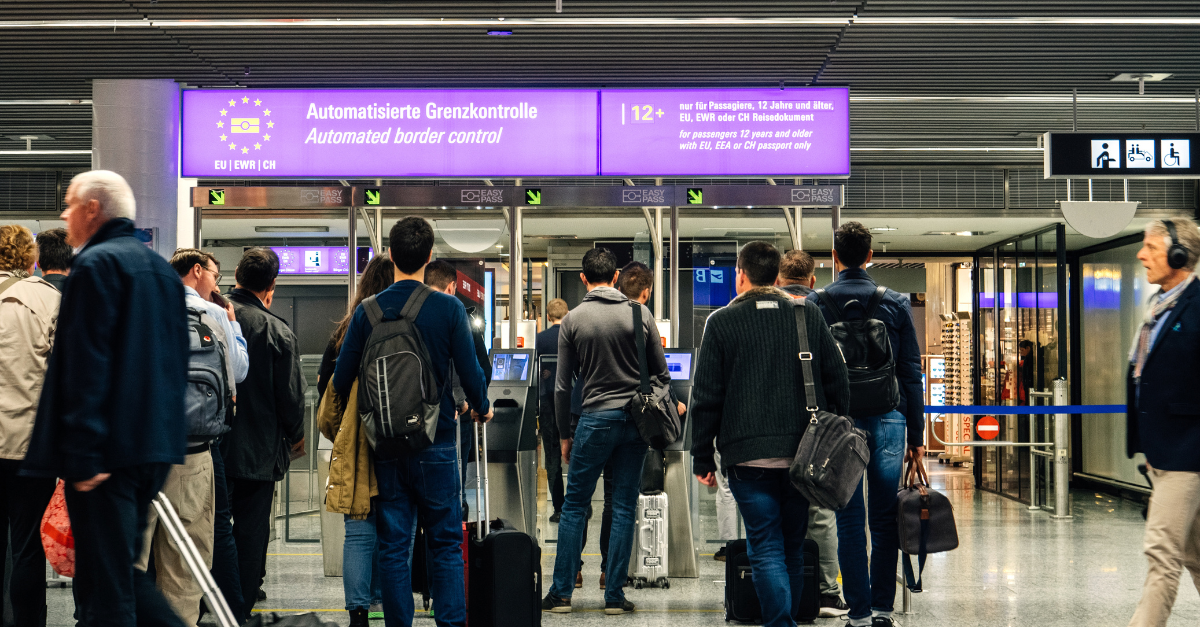

The European Union’s Entry/Exit System (EES) has been postponed, a decision met with relief from key travel industry bodies.
- Originally scheduled for 2022, the EES was delayed to November 2024, but further postponed due to unprepared systems in Germany, France, and the Netherlands.
- Travel industry leaders, including Abta and Aito, have expressed concerns about public awareness and are urging clear communication regarding the EES implementation.
- There is a consensus among industry representatives that the delay provides crucial preparation time, though persistent uncertainty remains.
- The phased implementation of the EES is supported as it allows for thorough testing and resolution of member states’ concerns.
The travel industry has responded positively to the European Union’s decision to defer the launch of the Entry/Exit System (EES), a new biometric border check system, which was initially planned for a 2022 rollout. This key development is the result of logistical challenges faced by Germany, France, and the Netherlands, whose systems are not yet ready to implement such extensive changes. Hence, the November 2024 start date has been pushed back yet again, offering relief to those in the travel sector.
Notably, Luke Petherbridge, director of public affairs at Abta, underscored the relief felt by the industry, stating that the indefinite delay alleviates the state of uncertainty that had pervaded. Petherbridge emphasised the need for urgent communication of next steps to avoid confusion among customers, particularly as the travel sector enters peak periods. “It is also really important,” he mentioned, “the rollout, in whatever form it takes, avoids peak travel periods.” Abta plans to keep offering guidance to members via their dedicated EES and ETIAS online resources.
Julia Lo Bue-Said, CEO of The Advantage Travel Partnership, echoed these sentiments, acknowledging the substantial preparation work undertaken by the UK outbound travel sector due to the anticipated EES introduction. She highlighted the low public awareness of the system’s implications on travel to Europe and stressed the importance of transparent communication as the new launch date approaches. According to her, it is imperative for the EU to ensure the system is fully functional and not another obstacle for travellers once operational.
Moreover, Christina Brazier, head of industry affairs at Aito, recognised the EU’s postponement decision as prudent, given the unresolved issues flagged by member states. Brazier noted that the delay affords the industry additional preparation time and protects vulnerable travellers from potential border confusion. “We fully support the proposal of a phased rollout,” she asserted, “as it will allow the system to be thoroughly tested before full implementation.” These views collectively highlight the importance of resolving outstanding technical and communication challenges prior to the EES’s activation.
The travel industry’s call for robust planning and improved communication highlights the need for the EES to align effectively with travel demands before its implementation.
