
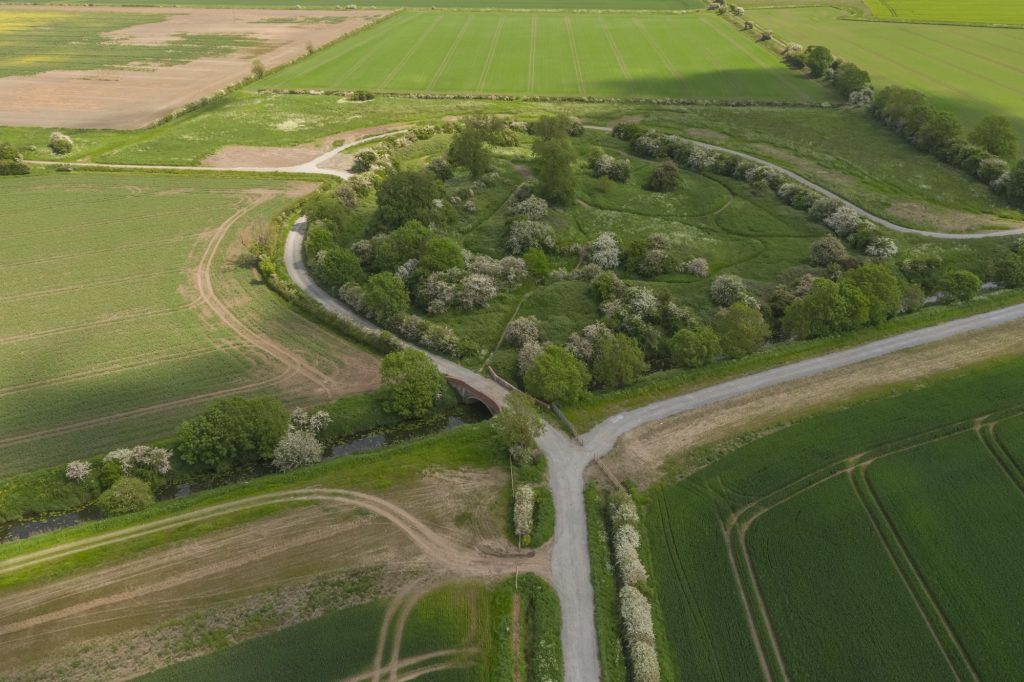

The Castlehill Aquagreen project, a key part of the £28M Holderness Drain Flood Alleviation Scheme, is now complete.
- This development includes a new automated pumping station in East Hull, crucial for managing flood risks.
- Collaborative efforts by multiple entities have driven this project, enhancing water management.
- Design enhancements cater to long-term sustainability and climate change resilience.
- The scheme brings socio-environmental benefits, contributing positively to local communities.
The Environment Agency has successfully completed the Castlehill Aquagreen, an essential component of the £28 million Holderness Drain Flood Alleviation Scheme. This innovative project is designed to store water during flood conditions, slowly releasing it into the Holderness Drain, thereby effectively managing the risk of flooding in the area.
To augment these efforts, a new automated pumping station has been constructed in East Hull, capable of handling flows of over 7.5 cubic metres per second. According to the Environment Agency, this facility ran effectively throughout the previous winter. The pumping station, located along the Holderness Drain’s main river, channels excess water into the Humber Estuary, alleviating potential flood risks.
The Holderness Flood Alleviation Scheme exemplifies a collaborative design and build approach, with JBA Consulting and JN Bentley leading the venture. The project, which commenced in 2018, saw contributions from multiple partners, including Callsafe, MBK Civils, Hornbill Engineering, and First Defence Fabrications, among others.
A significant emphasis of the project has been its focus on climate resilience. The design incorporates a 20% overdrive capability in the East Hull controls, temporarily boosting pumping output to 12 cubic metres per second when necessary. This foresight delays future pump upgrades and underscores the project’s sustainable approach to water management.
Beyond flood prevention, the scheme has introduced new woodland habitats and walking routes, enhancing the area’s social spaces and providing ecological benefits. Andrew Barron from the Environment Agency highlighted the project’s impact, stating that it not only reduces flood risk but also enriches local biodiversity and community access.
Rachel Glossop of Hull City Council praised the scheme for aligning with the council’s climate change and flood risk reduction policies. She noted the project’s dual focus on habitat creation and water storage, which supports a resilient urban environment.
The Castlehill Aquagreen project significantly mitigates flood risks while offering ecological and community benefits, securing its value for the region.
