
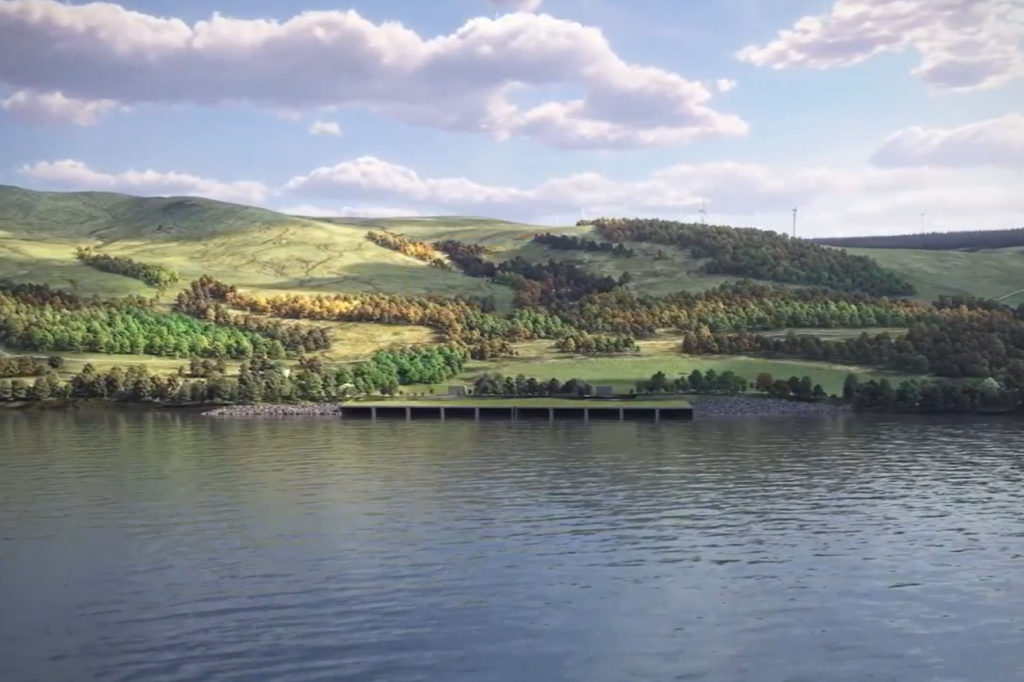

A major step in the UK’s renewable energy ambitions has been reached with the submission of a planning application for a substantial hydroelectric project at Loch Awe.
- The £2 billion Balliemeanoch pumped storage scheme aims to provide 1.5GW of power, enhancing grid stability and supporting renewable sources.
- The project is anticipated to power over 4.5 million homes and cut down 200Mt of carbon emissions over its lifetime.
- The scheme promises significant economic benefits, generating up to 1,000 construction jobs during peak periods and supporting extensive supply chain employment.
- Collaboration between ILI Group and Aecom has been crucial in overcoming planning challenges and ensuring the project’s alignment with environmental standards.
A significant phase in the UK’s renewable energy strategy has been initiated as the planning application for the £2bn Balliemeanoch 1.5GW pumped storage hydro scheme at Loch Awe is lodged with the Scottish Government. The project, spearheaded by ILI Group and supported by Aecom during its preliminary design and environmental assessment, is poised to play a vital role in achieving national energy objectives. Its potential impact is underscored by its capacity to power over 4.5 million homes while substantially reducing carbon emissions by 200 million tonnes over the course of its operational lifetime.
The envisaged headpond of the scheme, with a capacity of 58 million cubic metres, is designed to facilitate power generation of 1.5GW for up to 30 hours, which translates to approximately 45,000MWh. Such capacity is not just a technical milestone but also a crucial contribution to grid stability and the maximal utilisation of intermittent renewable resources. With construction costs estimated between £1.5bn to £2bn, the scheme is projected to create employment for up to 1,000 construction workers at its peak, alongside numerous indirect jobs throughout Scotland’s supply chain. Completion is targeted within a five-year frame with a connection slated for 2031.
ILI Group’s mark on the project has been significantly bolstered by its partnership with Aecom, whose expertise has expertly steered the complex design and environmental phases. ILI Group CEO Mark Wilson highlighted the project’s pivotal role in advancing the UK’s renewable energy infrastructure, emphasizing, “As we transition to a low-carbon future, long-duration energy storage solutions like Balliemeanoch are crucial for maintaining grid stability and maximising the potential of intermittent renewable sources.” He further supported the necessity for robust policies to facilitate such projects, calling attention to the UK’s government proposal on the cap and floor investment framework as essential to overcoming existing investment constraints.
Aecom project manager David Lee also underscored the strategic importance of the Balliemeanoch scheme within Scotland’s overall energy transition framework, describing it as “one of the projects at the forefront” of such efforts. He lauded the collaborative engineering and environmental efforts that have driven the project to this pivotal milestone, reinforcing its role in facilitating a broader lower-carbon energy supply system for the UK’s grid.
Alongside Balliemeanoch, Scotland has been progressing with several related projects, reinforcing its status as a leader in pumped storage hydropower development. The International Hydropower Association has recently released guidelines aimed at mitigating risks and fostering more robust development strategies for such projects, which are crucial to energy security and achieving net-zero targets. Notably, the region’s landscape includes the 1.5GW Coire Glas and the recently consented Cruachan 2, showcasing a concentrated and forward-moving thrust towards sustainable energy solutions.
The planning application for Balliemeanoch underscores Scotland’s commitment to renewable energy innovations, fostering a sustainable future.

