
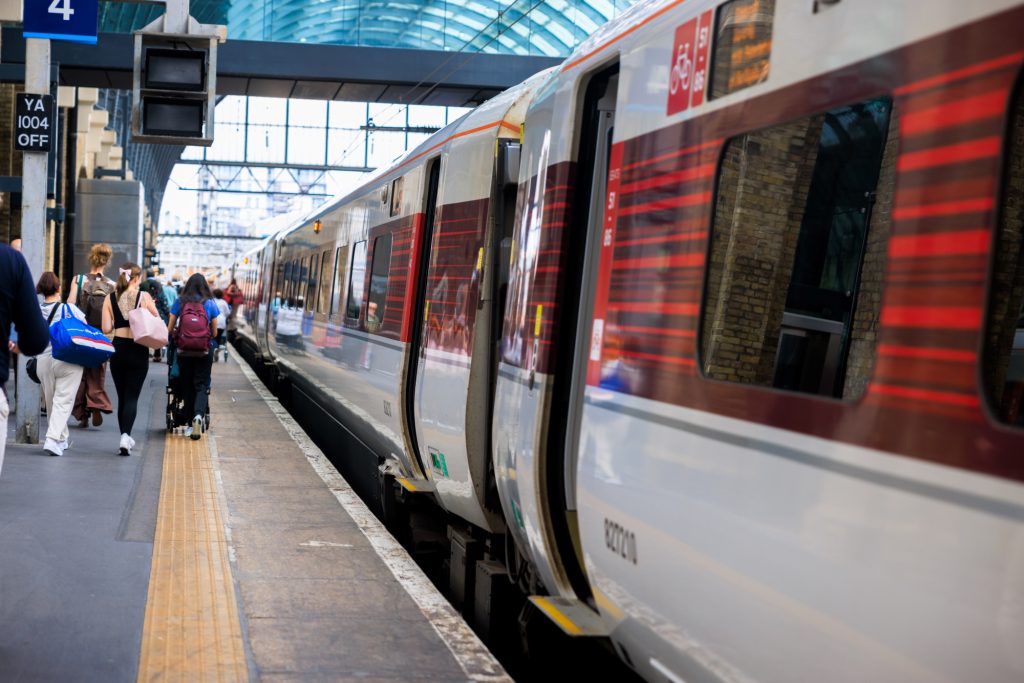

A recent incident involving Paralympian Tanni Grey-Thompson has highlighted ongoing challenges in railway accessibility.
- Grey-Thompson had to crawl off a train at King’s Cross station due to lack of assistance.
- Criticism has poured in from disability advocates and public figures demanding systemic changes.
- Current infrastructure inadequacies continue to hinder independent travel for disabled individuals.
- The issue has sparked a discussion on implementing ‘level boarding’ across UK stations.
On the night of 26 August, Paralympian and House of Lords member Tanni Grey-Thompson faced a significant challenge at King’s Cross station. Arrival assistance, which she had requested via social media, failed to materialise, resulting in Grey-Thompson having to crawl off a London North Eastern Railway (LNER) train.
Grey-Thompson, renowned for her sporting achievements with 11 Paralympic gold medals, publicly shared her ordeal, receiving widespread support and raising awareness of the accessibility issues plaguing UK rail systems. She expressed her frustration and exhaustion, highlighting the inadequacy of the existing support mechanisms provided for disabled passengers. LNER’s current passenger assistance, although theoretically available, was notably absent when required.
The company later issued an apology, describing an ‘issue’ with the service rather than acknowledging the incident’s severity. The responsibility for such failures lies not only with LNER but also with Network Rail, the station operator. Lord Hendy, the Minister of State for Rail, echoed public sentiment, admitting that the situation was unacceptable and promising improvements.
The necessity for ‘level boarding’, where train and platform levels allow for unimpeded access, has been underscored by disability rights campaigners. The UK’s ageing railway infrastructure presents significant challenges, with non-uniform platform heights and varying train designs exacerbating the problem. Despite initiatives like the ‘Access for All’ programme and funding allocations, accessibility remains limited.
Authorities have acknowledged these shortcomings. A report by Omio ranked the UK among the least accessible rail networks, prompting the government to redirect funding to improve station access. However, campaigners argue that until level boarding becomes a standard practice, disabled passengers will continue to face barriers.
Figures such as Gareth Dennis and Emma Vogelmann emphasise the critical nature of this issue. Dennis points out that, despite available technologies and standards, accessibility advancements remain insufficient, urging an industry-wide commitment to implement level boarding. Vogelmann stresses that each part of the travel experience—from user-friendly infrastructure to effective staff support—needs attention.
Contributing to this outcry, several leaders from the disability rights community, including Fazilet Hadi and Alison Kerry, voice the necessity for immediate and substantial changes in how rail services accommodate disabled passengers. Hadi advocates for innovation in train design, while Kerry underscores the broader implications of these challenges, extending beyond transportation into social inclusion.
The incident involving Tanni Grey-Thompson serves as a pivotal reminder of the urgent need for comprehensive improvements in railway accessibility.
