
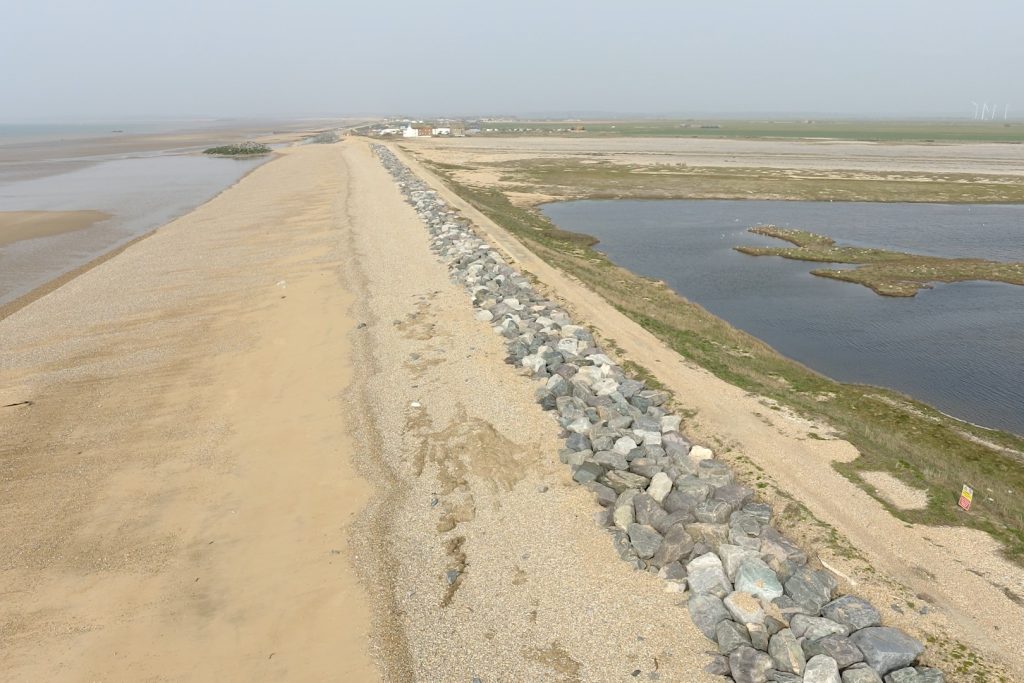

The completion of the £40M Lydd Ranges Sea Defence scheme marks a significant milestone in coastal protection.
- Despite challenging environmental constraints, the project was delivered in collaboration with key agencies.
- The initiative is pivotal for protecting Romney Marsh, vulnerable to tidal risks.
- Over 390,000 tonnes of shingle enhanced the coastal defences with sustainability measures in place.
- Innovative use of low-carbon materials and renewable energy sources set new standards in environmentally conscious construction.
The £40M Lydd Ranges Sea Defence scheme, completed by Van Oord UK, stands as a testament to overcoming environmental and operational challenges. In collaboration with the Environment Agency and the Ministry of Defence (MoD), this project is crucial for protecting Romney Marsh, a pivotal area situated below high tide levels.
This defence structure will safeguard 14,500 homes, 700 businesses, and critical infrastructure, besides the MoD’s live firing area at Lydd ranges from flooding risks. The Environment Agency highlighted the vulnerability of Lydd’s sea frontage to erosion, exacerbated by recent storms Dennis and Ciara, notably impacting the Jury’s Gap area.
Since the project’s inception in summer 2021, remarkable progress has been made with the importation of over 390,000 tonnes of shingle from licensed marine sources, effectively replenishing the beaches. A new 1.8 km timber groyne field, featuring 33 new groynes and refurbishments, was installed east of Jury’s Gap.
Sustainability was at the forefront with the use of recycled and sustainably sourced timber and a 1 km rock revetment at Jury’s Gap. Furthermore, a 1.8 km concrete track was improved, the flood wall known as the Green Wall was enhanced, and upgrades were made to the Denge outfall along with a new control chamber installation.
The project embraced environmental sustainability, utilising biofuels for all land-based machinery, significantly reducing CO2 emissions by 90% when compared to traditional fuels. Low-carbon concrete alternatives, like basalt reinforcement, were employed to achieve up to 88% savings in CO2 emissions. Crushed concrete from an old MoD track was repurposed as a sub-base for new roads, effectively minimising waste and the need for new materials.
The commitment to green energy was evidenced by on-site solar-powered cabins, supplemented by liquid propane gas (LPG) when necessary. Paul Hesk, Van Oord UK’s managing director, expressed pride in contributing to the environmentally sensitive project that united agencies such as the Environment Agency and Natural England, working collaboratively to achieve a successful outcome.
Sally Harvey, Environment Agency area director, lauded the scheme’s carbon-saving innovations and thanked partners for adopting new CO2 reduction techniques. Innovations included the use of biofuels, cement-free concrete, and renewable energy sources, marking the project as a benchmark in sustainable construction practices.
MoD Defence Training Estates South East commander Adrian Hunter underscored the project’s collaborative success, which enhanced military training capabilities while addressing coastal erosion challenges. Hunter emphasized the shared vision and teamwork which proved imperative to the scheme’s success, benefiting local communities, the environment, and military operations at Lydd.
The Environment Agency confirmed that this completed scheme ensures the protection of an environmentally significant region. Lydd, though small, is proximal to the environmentally protected Dungeness headland, recognized for its special scientific significance under Natural England’s guidelines.
The successful completion of the Lydd Ranges Sea Defence project demonstrates effective collaboration and innovation in coastal protection.

