
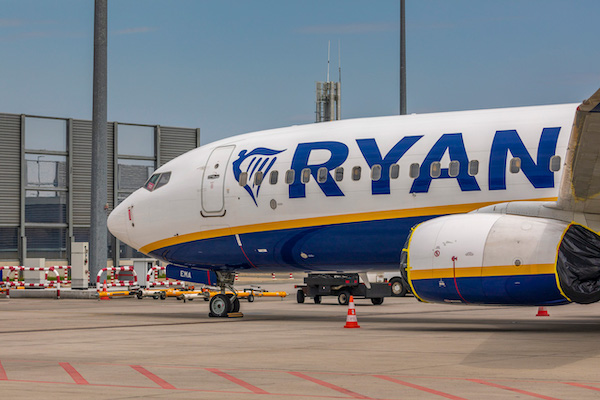

The collaboration between Ryanair and major online travel agencies (OTAs) marks an important development in the travel industry. This move brings shifts in longstanding opposition and legal entanglements to the forefront, compelling stakeholders to re-evaluate their strategies.
Unexpected Partnerships Amidst Legal Tensions
Ryanair’s recent agreements with Love Holidays and Kiwi.com came as a surprise to industry insiders, given the prolonged legal skirmishes between Ryanair and various OTAs. This unexpected alliance suggests a shift in strategy from the airline, which has been historically combative towards third-party booking platforms. The agreements signify a possible thawing of relations, albeit in a carefully constructed manner advantageous to Ryanair.
Historically, Ryanair has accused OTAs of undermining its business model, even labelling platforms like Kiwi.com as ‘pirate websites’. Legal disputes have been numerous, with Ryanair pursuing active cases across Europe to protect customer data and booking processes. Despite these tensions, the new partnerships indicate a pragmatic approach by all parties involved, potentially driven by economic pressures and shifts in market dynamics.
Economic Forces Behind the Agreements
Several economic factors likely influenced these agreements. Ryanair reported lower profits due to increased fuel prices and reduced fares after removing flights from OTA websites. This financial backdrop may have driven Ryanair to reconsider its stance toward OTAs, whose platforms significantly contribute to the airline’s booking revenue. It is estimated that about 20% of Ryanair’s bookings pre-pandemic were conducted through OTAs.
The pandemic magnified operational challenges for both Ryanair and OTAs, particularly concerning customer refunds and information sharing. The absence of agreements to manage shared customer data created significant bottlenecks, prompting the need for new collaboration frameworks. Meanwhile, European regulatory changes further necessitate clarity in OTA-airline relationships, offering a conducive environment for these agreements.
High Court Rulings and Their Implications
Legal rulings have also played a pivotal role in shaping Ryanair’s relationships with OTAs. Last October, On the Beach won a significant court case against Ryanair, resulting in substantial refunds. The court determined Ryanair’s responsibility despite its stance on contractual obligations, setting a legal precedent affecting future interactions between airlines and third-party agents.
These legal precedents likely pressured Ryanair and OTAs to find a middle ground. The need to comply with evolving consumer rights regulations in Europe, such as those requiring customer refunds, adds another layer of complexity to their dealings. Acknowledging these factors underlines the necessity for Ryanair to optimise its operational framework with OTAs in response to judicial outcomes.
Both Ryanair and the OTAs face ongoing legal disputes across various jurisdictions. These ongoing litigations encapsulate the tensions and competitive undercurrents that define the airline’s interactions with booking platforms, shaping strategic choices at the corporate level.
Private Equity Influence
The role of private equity (PE) in the ownership of Love Holidays and Kiwi.com cannot be overstated in these developments. Both OTAs are PE-backed, with Love Holidays owned by Livingbridge and Kiwi.com by General Atlantic. This ownership structure inherently drives pressure for growth and realisation of investment returns, sometimes prompting strategic pivots like the recent agreements with Ryanair.
In pursuit of optimal valuations for prospective sales, resolve and stability in OTA-airline relationships become paramount. Unresolved disputes with Ryanair present potential risk variables that could devalue sales prospects for the PE owners. Thus, these strategic partnerships are not only about operational synergy but also critical financial manoeuvres to enhance market attractiveness of these OTAs.
Future Prospects and Continued Tensions
Despite these strategic agreements, tensions between Ryanair and OTAs persist. Ryanair remains committed to its stance against other prominent OTAs, continuing to denounce their practices publicly. These ongoing discordances highlight the complexities underlying the apparent collaborations.
The anticipation of resolving issues through new agreements does not eliminate the deeply rooted competitive rivalries existing between Ryanair and its third-party entities. Both Ryanair and OTAs continue to engage in legal proceedings across Europe, reflecting a landscape still characterised by significant contention.
The anticipation of greater regulatory scrutiny on both airline operations and online agency offerings may drive further adaptations in Ryanair’s strategy. The evolving landscape necessitates vigilant monitoring to anticipate changes in regulatory expectations, which could redefine the operational paradigms for both Ryanair and OTAs.
Conclusion Insights
The Ryanair-OTA agreements underscore a striking evolution in airline-industry alliances, blending economic necessity with strategic foresight. These partnerships might represent the beginning of a new era in travel market dynamics.
As legal battles continue and regulatory landscapes evolve, Ryanair’s interactions with OTAs will remain a focal point for industry watchers. This collaboration, shaped by complex economic and legal forces, illustrates the relentless drive for competitive advantage in the ever-evolving travel industry.
The Ryanair-OTA agreements mark a significant shift in travel industry relations, driven by economic, legal, and strategic factors. While the agreements suggest potential cooperation, underlying tensions persist. Continued legal disputes and regulatory pressures will likely influence future dynamics between Ryanair and OTAs, shaping the competitive landscape.

