
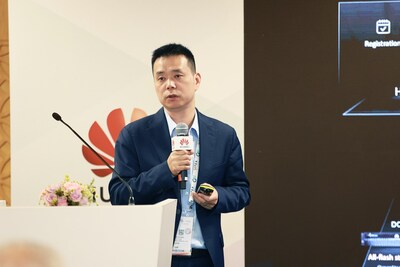

Huawei showcased an impressive array of 17 products and 6 solutions at GITEX Global 2024, targeting various sectors such as education, healthcare, manufacturing, and SMEs. The potential impact of these offerings on the global tech landscape is immense, prompting questions about Huawei’s future trajectory.
With an increased emphasis on digital integration across multiple industries, Huawei’s latest innovations could potentially redefine sectoral standards and strengthen their market position. Such advancements might become pivotal in establishing Huawei as a leader in the tech world.
Innovations in Education and Manufacturing
One of the standout products is the IdeaHub K3, specifically designed to enhance classroom engagement and interaction. This innovative tool aims to revolutionise educational experiences by integrating digital technology into traditional learning environments.
The manufacturing sector witnessed the introduction of a new factory network system, enhancing production efficiency and flexibility. This system supports businesses in maintaining a competitive edge by streamlining operations and reducing unnecessary costs.
Empowering Small and Medium Enterprises
Huawei’s introduction of an all-flash data centre is a game-changer for SMEs, offering simpler IT management and enhancing operational reliability. This infrastructure promises to minimise disruptions and reinforce data security, which is crucial for small businesses.
Additionally, managed service providers (MSPs) have received new tools that simplify service delivery. These tools are designed to support MSPs in scaling operations to meet growing customer demands.
Collaborative Ecosystems and Partnerships
Huawei has long prioritised collaboration, developing over 300 solutions to cater to diverse industry needs. Its eFly platform exemplifies this by enabling partners to connect with enterprise customers, fostering new opportunities.
Peter Zhang highlights the strategic importance of building a trustworthy partner-centric ecosystem. Through this framework, Huawei aims to deliver tangible benefits and incentives to its partners, thereby supporting mutual growth and success.
Huawei’s collaborations extend globally, as seen in its support for digital services in Kuwait and green infrastructure in the UAE. These efforts underscore Huawei’s commitment to innovative and sustainable development.
Expansion of Cloud Services in MENA
In the Middle East and North Africa, Huawei has significantly bolstered its public cloud business, driving digital transformation across key sectors. With substantial growth over the past year, Huawei is strategically positioned as a formidable player in the regional cloud market.
South Africa witnessed Huawei’s early entry into the cloud services domain, marking it as the first large-scale provider in the country. This pioneering move continues to pay dividends as the cloud market is projected to soar by 2028.
Hybrid Cloud Solutions for Large Organisations
Huawei’s presentation at GITEX included hybrid cloud solutions that integrate on-site and cloud systems for enhanced data control and flexibility. These solutions are crafted to meet the specific demands of sectors like public services and finance.
Such hybrid systems not only enhance service delivery but also facilitate efficient management of local infrastructure and cloud platforms. This dual approach allows businesses to optimise operations without compromising security.
Potential Market Impact and Future Prospects
Huawei’s robust presence at GITEX 2024, with over 6,500 exhibitors and 1,800 startups, highlights the potential market impact of its hybrid solutions. This exposure is crucial for forging new partnerships and exploring niche markets.
As Huawei continues to innovate and expand its technological repertoire, its potential to lead the tech world becomes increasingly plausible.
Huawei’s extensive array of innovations and strategic partnerships position it at the forefront of the technological race. As these developments unfold, Huawei’s potential to redefine industry standards and lead the global tech landscape becomes increasingly evident.
