

Airports in Scotland’s northern regions are steadily advancing towards pre-pandemic passenger numbers, indicating a resilient recovery in air travel.
Highlands and Islands Airports Limited (Hial) has reported notable increases across its network, showcasing a positive trend amidst ongoing economic challenges.
Current Trends in Passenger Numbers
Passenger traffic at airports across the northern regions of Scotland is demonstrating a positive trajectory, with numbers progressively nearing pre-Covid levels. Following the recent figures released by Highlands and Islands Airports Limited (Hial), there has been a 3.5% increase across its 11-airport network, totalling nearly 1.5 million passengers for the fiscal year 2023-24. These statistics reflect a steady recovery in air travel demand amidst continuing economic challenges.
Key Performers and Laggards
Inverness Airport leads the recovery charge with a remarkable 5.6% growth, serving 792,150 passengers, marking it as the top performer within the network. Wick John O’Groats Airport surpassed expectations with a staggering 22.2% rise, reaching 11,224 passengers. At the same time, Campbeltown and Islay airports reported substantial increases of more than 15% and 7.9%, respectively.
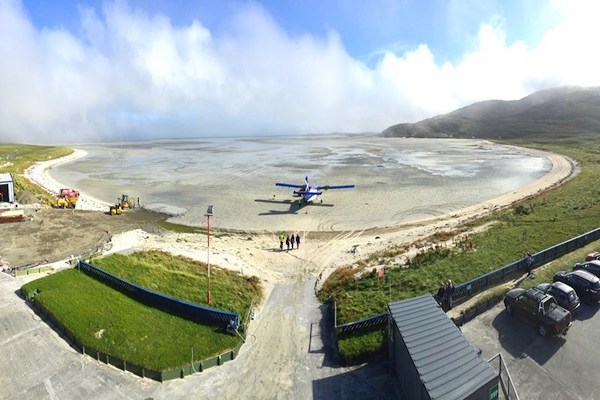
Despite this encouraging trend, not all airports experienced growth. Barra, Benbecula, and Dundee airports reported declines in passenger numbers, indicating areas needing strategic focus to boost their recovery trajectories.
Strategic Investments in Infrastructure
The commitment to enhancing airport infrastructure is evident with substantial investments being made. A notable £5 million project is currently underway to upgrade the two runways at Islay.
Furthermore, a substantial £9 million has been dedicated to installing new energy-efficient runway lights at both Inverness and Kirkwall airports. Such advancements are crucial in bolstering the airport’s operational efficiency while supporting sustainable practices. Additionally, £5.3 million has been allocated to counter coastal erosion around Stornoway Airport, safeguarding the infrastructure and nearby areas.
Enhancing Connectivity and Accessibility
Strategic routes have been introduced to bolster connectivity, notably flights linking Dundee, Orkney, and Shetland with London Heathrow. This move is pivotal in enhancing the connectivity between remote Scottish communities and the international travel hub.
These new flight routes are indispensable in providing vital links for island communities, facilitating not only travel but also economic exchange and growth.
Through these routes, island residents now have improved access to international destinations, potentially boosting tourism and local economies.
Leadership Perspectives and Future Outlook
Paul Kelsall, Hial’s Chief Executive, expressed optimism regarding the recovery trajectory of passenger numbers, emphasising on the continuity of the upward trend from 2022-23. The strategic investments are seen as critical in ensuring the infrastructure’s resilience and capacity to support future growth.
Kelsall highlighted the strategic importance of maintaining and upgrading infrastructure to ensure the long-term viability of these airports. Such measures underpin the overall sustainability and growth potential of the aviation sector in the region.
Challenges and Opportunities Ahead
Despite the positive outlook, challenges persist, particularly with economic uncertainties that could impact travel behaviour. The need for continuous adaptation and strategic planning remains imperative.
Opportunities lie in further increasing the network’s connectivity and leveraging infrastructure improvements to attract more airlines, which could significantly enhance passenger numbers and service quality.
Conclusion
The trajectory towards pre-pandemic levels in the Highlands and Islands aviation sector is promising. With strategic investments and a focus on connectivity, the region is poised for improved economic engagement and transportation resilience.
The steady progress in passenger numbers across the Highlands and Islands suggests a robust recovery trajectory.
Strategic investments and enhanced connectivity are key drivers in returning to pre-Covid levels and supporting future growth.
