
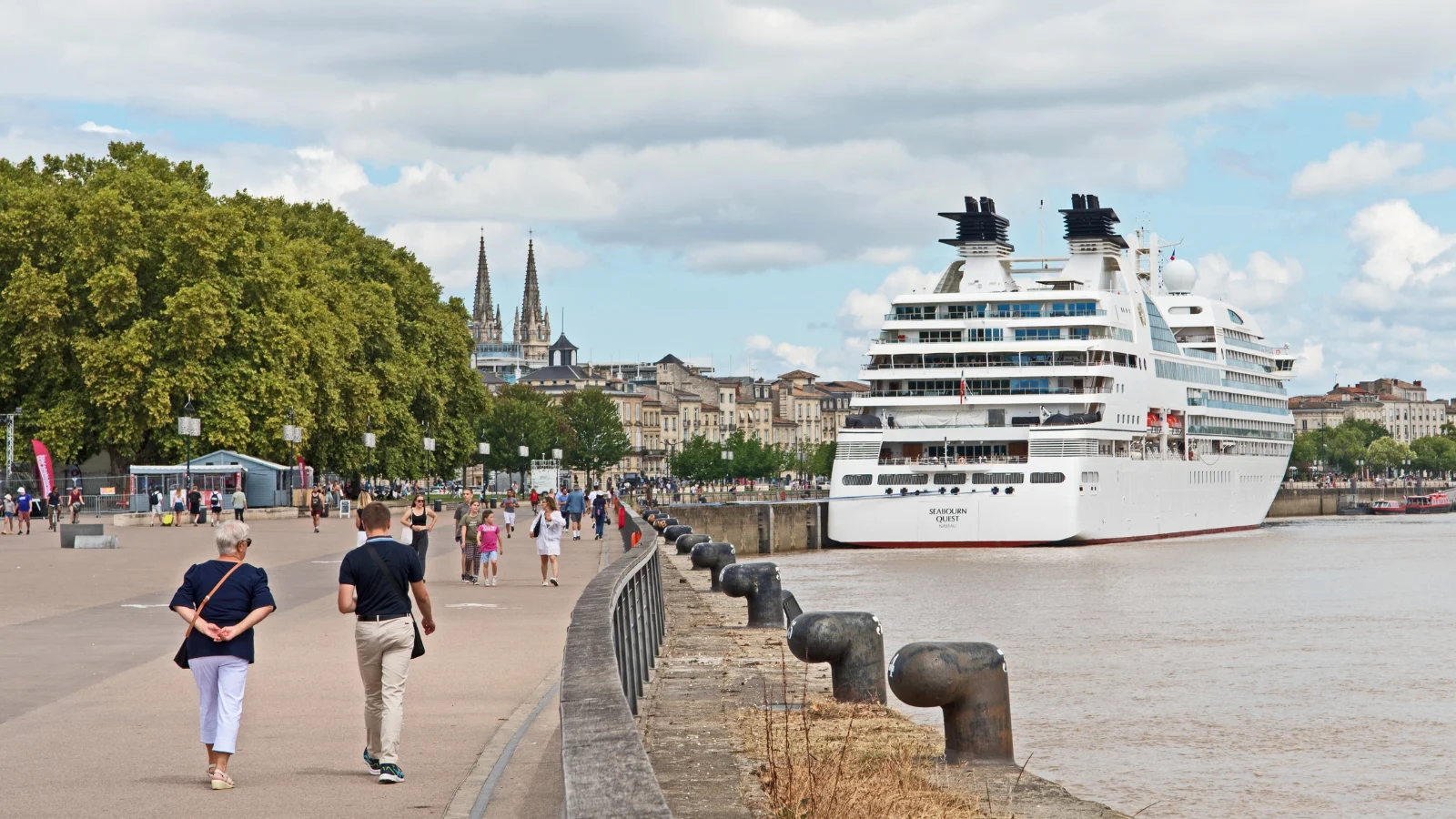

Bordeaux’s mayor seeks to ban cruise ships due to environmental and aesthetic concerns.
- Complaints arise regarding cruise ships being an ‘eyesore’ in Bordeaux city centre.
- Limits have been set to 40 ships annually, but calls for a full ban persist.
- Alternative docking locations are proposed to mitigate environmental impacts.
- Economic concerns emerge regarding the relocation of cruise docking sites.
The mayor of Bordeaux has voiced strong opposition against the docking of cruise ships in the city centre, describing them as an unwelcome intrusion that disrupts the scenic and environmental integrity of the region. The local government’s stance aligns with growing public sentiment against these large vessels, which have been increasingly viewed as an eyesore by the residents.
Currently, the city has restricted the number of cruise ships permitted to dock in Port de la Lune to a maximum of 40 annually. However, this measure appears insufficient for some, including Mayor Pierre Hurmic, who is advocating for a complete prohibition. The mayor underlined the environmental damages these cruise ships inflict, contributing significantly to pollution and visual degradation of the landscape.
To address the ongoing concerns, authorities have proposed an alternative mooring site further along the Garonne River’s right bank. This potential relocation introduces a logistical solution involving a shuttle service to transport passengers between the new docking area and the city centre, aiming to lessen the ecological footprint on Bordeaux’s central precincts.
Nevertheless, the proposal has sparked a debate on the economic ramifications such a move might entail. Patrick Sequin, president of the Bordeaux-Gironde Chamber of Commerce and Industry, has voiced concerns about the severe impact on local trade, indicating the crucial role the cruise industry plays in the region’s economic landscape.
The discourse in Bordeaux mirrors actions taken by other cities, such as Amsterdam, which has announced plans to relocate its cruise terminal to combat similar issues of environmental strain and over-tourism. This trend underscores a broader movement towards sustainable tourism practices, reflecting the global challenge of balancing economic interests with environmental stewardship.
The debate in Bordeaux highlights the complex balance between preserving environmental sanctity and maintaining economic vitality.
