
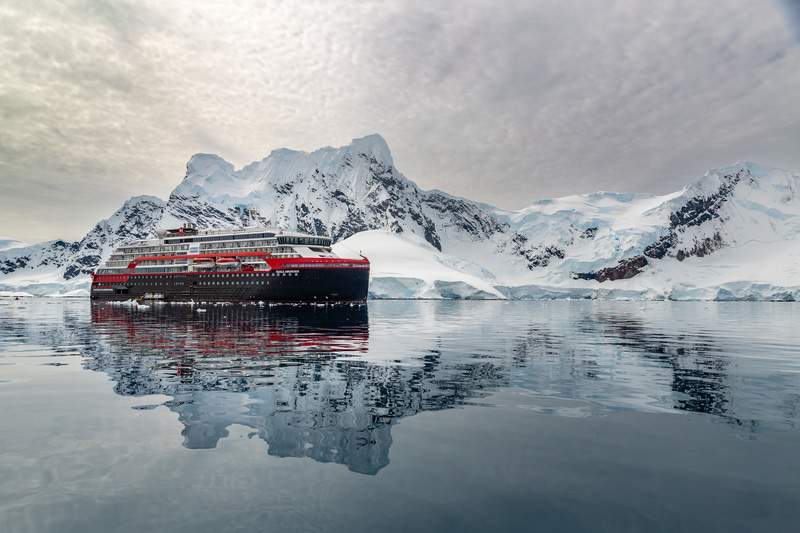

The UK advertising watchdog has censured HX for misleading sustainability claims in their fly-cruise advertisement.
- The advertisement, featuring the claim of ‘sustainable expeditions,’ was published on 6 March 2024.
- A complaint challenged the implication that the expeditions had minimal environmental impact.
- HX contended that ‘sustainable expeditions’ was not meant to include flights.
- The Advertising Standards Authority (ASA) upheld the complaint, ruling the advert must not reappear.
In a significant ruling, the UK’s Advertising Standards Authority (ASA) has taken action against HX, previously known as Hurtigruten Expeditions, for a contentious claim made in a fly-cruise advertisement. This advert, appearing on a digital platform of a national newspaper in March 2024, asserted ‘free flights to Svalbard and more,’ before elaborating that such offers applied to ‘selected Svalbard cruises’. It further touted, ‘Since 1896, we’ve been the leaders in sustainable expeditions.’ Such claims have now come under scrutiny for their veracity.
The catalyst for this scrutiny was a complaint questioning the legitimacy of these claims related to ‘sustainable expeditions’. The complainant posited that the phrase misleadingly suggested that the environmental impact of these expeditions was negligible. This assertion compelled ASA to evaluate the substantiation behind HX’s environmental declarations in their advertising.
Reacting to the complaint, HX provided their perspective, arguing that an average consumer would likely not interpret ‘sustainable expeditions’ as covering the environmental footprint of flights associated with the travel packages. Rather, the company maintained that the concept of expeditions bears stronger connections to terrestrial or marine journeys.
Moreover, HX clarified that while they employed the term ‘sustainable’, it was not intended to suggest that their cruises were completely devoid of any ecological impact. Instead, the company emphasised that their overall environmental footprint was comparatively lower than other cruise industry operators, striving to make a case for their sustainable initiatives.
Despite these defences, the ASA upheld the complaint, leading to a prohibition on the recurrence of the advertisement in its disputed form. The ASA’s directive mandated that HX should ensure transparency in future environmental claims, making clear the basis of such assertions. Moreover, it emphasised the necessity for robust evidence to substantiate their environmental claims, thereby aligning with the UK Code of Non-broadcast Advertising and Direct and Promotional Marketing (CAP Code) rules. The ruling identified breaches under Rule 3.1 for misleading advertising and several provisions (11.1, 11.3, and 11.4) related to environmental claims.
Underlining the importance of accuracy, the ASA elaborated on the CAP Code’s stipulations, asserting that any environmental claim should be apparent and that unambiguous claims necessitate thorough validation. This required advertisers to assess the full life cycle of the advertised product unless an exception was specified within the advertisement. Since HX failed to clarify the foundation of their sustainability claim, and without comprehensive evidence regarding the product’s entire life cycle, the ASA concluded that the advertisement had led consumers to underestimate the environmental impact of HX’s offerings.
The ASA’s ruling serves as a reminder for advertisers to substantiate environmental claims with clear, robust evidence.
