
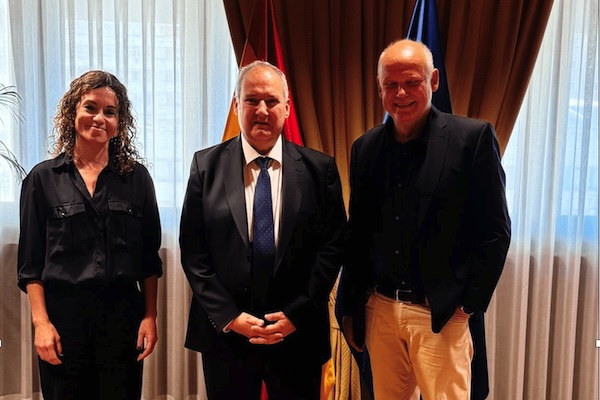

At a recent meeting in Madrid, Sebastian Ebel, the CEO of Tui Group, highlighted the crucial role of local support in achieving sustainable tourism. His remarks resonated amidst ongoing protests against mass tourism, pointing out the need for a cohesive approach that integrates the interests of local residents, policymakers, and the tourism sector.
Ebel’s discussion unveiled strategies centred on community well-being and environmental stewardship, setting the stage for a new model of tourism that honours local cultures and ecosystems.
Collaboration in Tourism
The chief executive of Tui Group, Sebastian Ebel, recently emphasised the significance of local support for tourism sustainability during a meeting in Madrid. Co-operation between communities, government bodies, and the travel industry was cited as essential for capitalising on tourism benefits while ensuring community welfare. Ebel noted, “Only tourism that is accepted and supported by local people can be sustainable.”
The dialogue underscored the role of package holidays in this model, which are considered a cornerstone of sustainable tourism by Tui. Ebel highlighted that tourism should contribute positively to local living spaces, taking into account education, employment, culture, and affordable housing. These are crucial components of social sustainability, and joint initiatives are already showing success in various global destinations.
Economic Impact of Tourism
Tourism represents a substantial portion of Spain’s economy, accounting for 12.8% of the GDP in 2023, with projections to rise to 13.4% this year. The influx of over six million Tui holidaymakers this summer is expected to secure thousands of jobs across Spain’s hospitality and travel sectors. The economic ripple effect benefits hotels, airports, and local businesses, reinforcing tourism’s pivotal role.
Ebel conveyed that Spain’s current discourse indicates a preference for sustainable tourism rather than opposition. Spanish citizens seek a form of tourism that enriches their locales without compromising their quality of life.
Sustainability Initiatives
Ebel outlined Tui’s commitment to sustainability, which includes embracing green innovations and sustainable practices. He mentioned the integration of green energy and sustainable fuels as part of their operational framework in Spain. This initiative aligns with their broader strategy to foster socially and environmentally responsible tourism.
Additionally, there is a plan to enhance educational and training opportunities, alongside promoting efficient water use within hotels and cruise ships. Sustainability is deeply embedded in Tui’s organisational ethos and strategic initiatives. The group envisions a future where tourism develops harmoniously with local needs and environmental imperatives.
In partnership with Spanish authorities, Tui is exploring advancements in sustainable aviation fuel (SAF) production. Such collaborations aim to minimise environmental footprints while maximising economic benefits for host communities.
Regulatory Considerations
During the meeting, Ebel addressed the European Package Travel Directive, urging Spanish support for amendments that favour balanced competition across the market. He stressed the importance of maintaining the appeal of package holidays by preventing additional regulatory burdens that could hinder market dynamics.
The discussions highlighted a shared commitment to a regulatory framework that allows sustainable tourism development without creating disproportionate challenges for industry stakeholders.
Local Empowerment
Ebel emphasised that tourism should not overwhelm local resources or dilute cultural integrity. The responsibility rests on operators to create and promote tourism models that integrate seamlessly with local customs and capabilities. By doing so, tourism can thrive as a sustainable driver of economic and social gains for all parties involved.
He brought attention to existing successful models where tourism coexists with the local way of life, bringing improvement rather than disruption.
Ultimately, tourism thrives when it is woven into the fabric of local community life, serving both economic and social ends. Sustainability, when rooted in local perspectives, ensures resilience and long-term prosperity for both tourism operators and the communities they engage. Ebel’s insights reaffirm the critical role of local support in shaping sustainable tourism futures.
Spain’s ongoing dialogues reflect an evolving understanding of tourism’s impact, signalling a collective move towards practices that honour community needs and environmental stewardship. By fostering partnerships and embracing sustainable strategies, the tourism industry can remain a robust pillar of economic development.
