
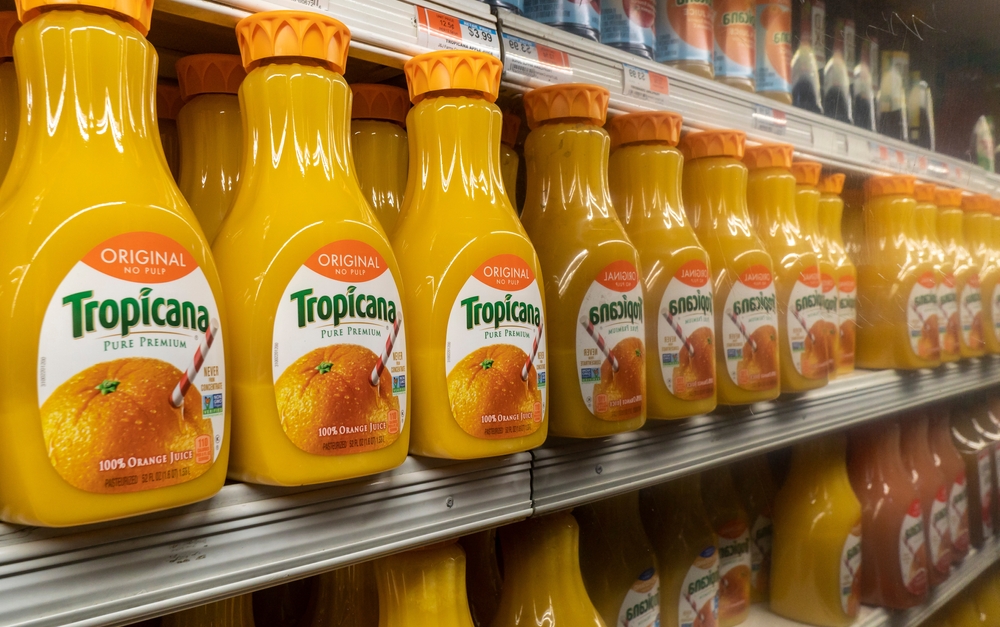

The rising cost of oranges due to citrus greening disease is impacting juice producers significantly.
- Tropicana’s owner, Naked Juice, is experiencing a notable decrease in expected profits this year.
- Production costs have increased as orange crops in Florida suffer significant damage.
- To mitigate the impact, sourcing has shifted towards Brazilian oranges, which currently make up 75% of the supply.
- Industry leaders warn that global conditions will further elevate prices, affecting consumer costs in the UK.
The citrus greening disease continues to devastate orange crops, leading to dramatic price increases and impacting major juice producers. Naked Juice, the owner of Tropicana, has experienced a significant downturn in profit forecasts, with expected underlying profits now at $322 million (£241 million), down from an earlier projection of $375 million (£279.8 million). This decline is attributed to the escalating costs associated with sourcing healthy fruit. Over the past year, the spread of citrus greening has particularly afflicted Florida, a key source of oranges, thereby raising production costs exponentially.
The heightened costs are reflected in the surge of orange prices, which have doubled to $6,500 (£4,800) per tonne. This price increase underscores the severity of the disease’s impact on the supply chain, affecting raw material availability and cost-effectiveness for companies reliant on these crops. In response to these challenges, Naked Juice has adjusted its sourcing strategy by increasing its reliance on Brazilian oranges, which have been less affected by the disease due to advances in agricultural technology.
Currently, a mix of 75% Brazilian and 25% Floridian oranges is being utilized to continue production. Gerald Phelan, an analyst from S&P Global Ratings, noted that this shift was necessary to maintain production levels amidst the ongoing crisis. The spread of the disease in Brazil, while present, has been mitigated more effectively, allowing for a more stable supply.
Industry insights reveal that these conditions, compounded by other environmental factors such as drought and extreme weather, are likely to drive prices higher. Nick Canney, CEO of a prominent juice brand, emphasized the long-term implications for consumer prices in the UK. He assured that the industry is striving to find ways to balance affordability with the rising costs, stating, “Over time, it will definitely move prices forward again. You have to try and work out how to keep it affordable for people.” This statement reflects a broader concern about maintaining market stability in the face of economic pressures.
The continued spread of citrus greening disease and other environmental challenges present ongoing obstacles for juice producers worldwide.
