
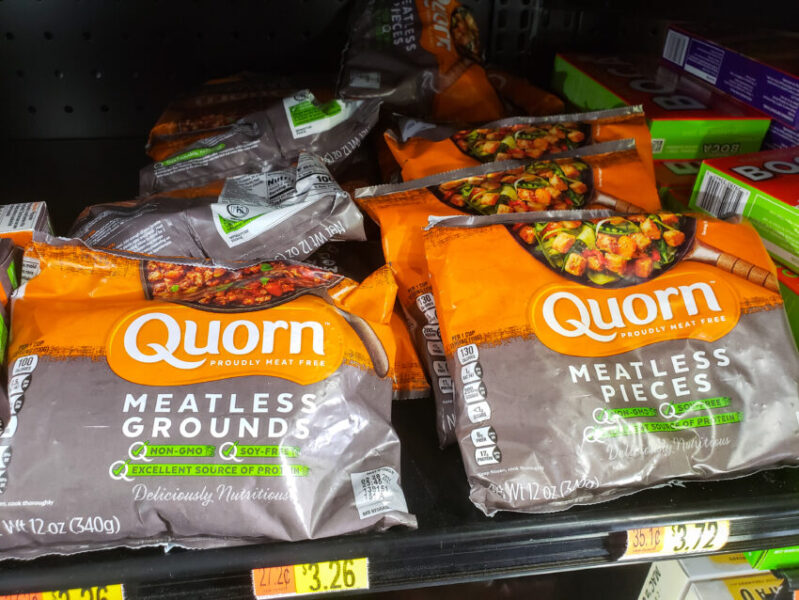

Marlow Foods, Quorn’s parent company, has reported a £63 million loss, reflecting the struggles faced in the plant-based food industry.
A drop in demand for vegan products, coupled with rising production costs, has resulted in job cuts and strategic restructuring to mitigate financial losses.
Quorn Faces Financial Challenges
In the last fiscal year, sales for Quorn fell by 6.9%, resulting in a revenue decline to £205 million. This financial downturn has led to considerable changes within the company, including the elimination of nearly 100 jobs as part of a strategic restructuring effort.
Sales across UK retailers dropped by 8.6% for Quorn by December 2023, underscoring a wider decline in plant-based product popularity. Factors such as inflation and rising costs of energy and ingredients are exacerbating these economic pressures, leading to tough decisions on workforce reduction and cost management.
Industry-Wide Difficulties
The decline in Quorn’s sales is not an isolated incident. A broader slump in the vegan market is apparent, with chilled meat alternative sales dropping by 9.7% over the 12 months to May. This trend is impacting brands across the sector, leading to severe consequences for other companies.
Brands like Meatless Farm and VBites have faced administration, revealing the fragile nature of the plant-based products market. Rising costs and declining consumer interest are pivotal challenges that the industry is grappling with.
Marlow Foods’ Strategic Response
To adapt to the current market environment, Marlow Foods has reduced its workforce from 934 to 874 employees. The goal is to manage operational costs amid these challenging conditions.
CEO Marco Bertacca has acknowledged 2023 as a particularly tough year. He cited “high inflation and interest rates” as key factors that have led to financial strain, despite efforts to keep products affordable. Bertacca has expressed an ongoing commitment to finding solutions to these challenges.
Confidence in Mycoprotein Technology
Despite the setbacks, Marlow Foods remains optimistic about the potential of its mycoprotein technology. This innovation, which utilises a fermented fungus to produce protein-rich alternatives, is seen as a sustainable solution to global protein needs.
Marco Bertacca is confident about the technology’s uniqueness and its potential impact. He believes that “fungi and fermentation can be the protein solution the planet needs,” offering a forward-thinking approach amidst current adversities.
The Broader Economic Impact
The economic challenges faced by companies like Marlow Foods are reflective of broader market conditions. Rising inflation and raw material costs are affecting businesses globally, not just in the plant-based sector.
As industries adjust to these financial hurdles, the shift in consumer preferences adds another layer of complexity for companies trying to sustain growth and remain competitive.
Future Outlook for Plant-Based Products
While current statistics paint a challenging picture, the long-term outlook for plant-based products remains cautiously optimistic. Innovation and adaptation are crucial for brands navigating this evolving landscape. Companies must refine their strategies to align with changing consumer demands.
The plant-based sector’s resilience will depend on its ability to innovate and meet environmental sustainability goals. As these products become more mainstream, market dynamics are likely to shift in their favour.
Conclusion
Marlow Foods’ financial struggles highlight significant challenges within the plant-based food industry. Yet, through strategic adjustments and technological advancements, there remains potential for recovery and growth as the market evolves.
Marlow Foods’ financial struggles highlight significant challenges within the plant-based food industry. Yet, through strategic adjustments and technological advancements, there remains potential for recovery and growth as the market evolves.
