

In September, the UK experienced a deceleration in its economic growth, as businesses grappled with uncertainties surrounding the upcoming government budget.
The widely observed Purchasing Managers’ Index (PMI) reported lower-than-expected growth, reflecting cautious business sentiments. With economic strategies still unclarified, firms are adopting a restrained approach, impacting overall activity.
Deceleration in Economic Activity
The UK PMI “flash” composite output index, an essential measure of business activity, fell to 52.9 in September from 53.8 in August. This decline, although slight, indicates a slowing pace of growth. Despite staying above the 50-point mark, which denotes expansion, the index’s drop below forecasts reveals prevailing economic caution.
Business Hesitancy Amid Budget Concerns
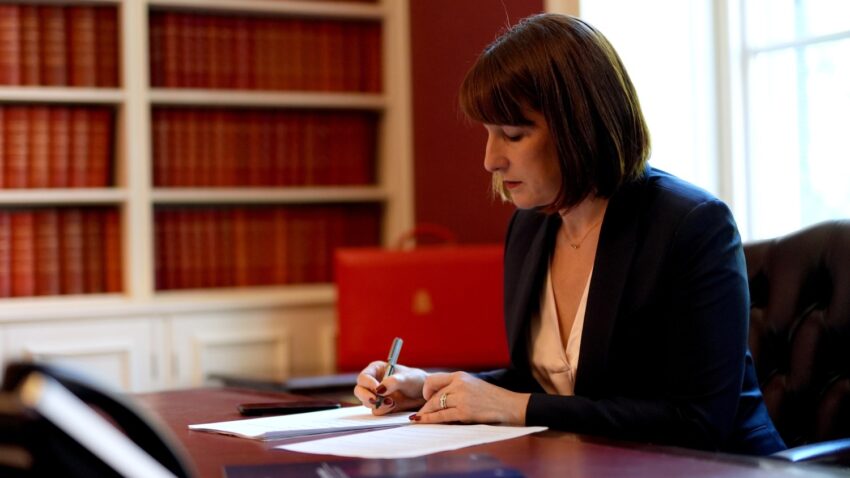
Businesses are increasingly cautious as they await the budget announcement by Chancellor Rachel Reeves at the end of October. This uncertainty has led to a noticeable pause in investment and hiring. The apprehension is particularly evident in the manufacturing sector, where firms are hesitant to proceed without clear fiscal policy directions.
Chris Williamson, Chief Economist at S&P Global Market Intelligence, noted, “Investment plans have been put on hold, and hiring has slowed as businesses await clarity on government policies, especially taxation.”
Impact Across Sectors
Both services and manufacturing sectors witnessed a subdued growth rate in September. The decline in new business reflects fragile client confidence, exacerbated by reduced inventory levels. Firms are holding back, waiting for government policy clarity.
Despite these challenges, Williamson expressed optimism, describing the data as indicative of a potential ‘soft landing’ for the UK economy. Inflation pressures, he noted, seemed to be easing, barring a significant economic downturn.
Costs for businesses increased in September, breaking a record 45-month low noted in August. However, the rise in prices charged was at its slowest since February 2021, hinting at controlled inflationary pressures.
Market Responses and Predictions
Economic analysts maintain a cautiously optimistic outlook despite the recent PMI figures. Alex Kerr from Capital Economics stated that the dip does not signal an impending downturn. He anticipates further intervention from the Bank of England, which recently cut the base rate, with more reductions expected in 2024.
These adjustments appear to aim at stabilising the economy. The final PMI report, once comprehensive data is analyzed, could offer a refined perspective on the current economic trajectory.
Inflation and Pricing Dynamics
Although business costs rose in September, inflation pressures are suspected to be diminishing, fostering a sense of cautious optimism.
The slowest increase in business prices since early 2021 suggests potential stabilisation in inflation dynamics. This trend is seen as a promising indication amidst broader economic challenges.
Businesses remain alert to evolving fiscal strategies which will play a pivotal role in shaping future market pricing and economic health.
Future Economic Strategies
As the budget announcement nears, firms anticipate strategic governmental moves to stabilise and spur economic activity. Businesses are poised to adapt quickly to any fiscal changes, especially regarding taxation.
These potential policy shifts are critical. They will determine the pace and direction of investments and hiring, which have been tentatively on hold.
Financial Expert Commentary
Insights from financial experts suggest the UK economy could navigate these uncertainties effectively.
With appropriate policy measures, there’s potential for sustained growth, aligning with the evolving global economic landscape.
Despite the slowdown in September, there remains cautious optimism about the UK economy. Businesses and analysts alike await clarity from the upcoming budget, a pivotal moment that could chart the path forward.

