
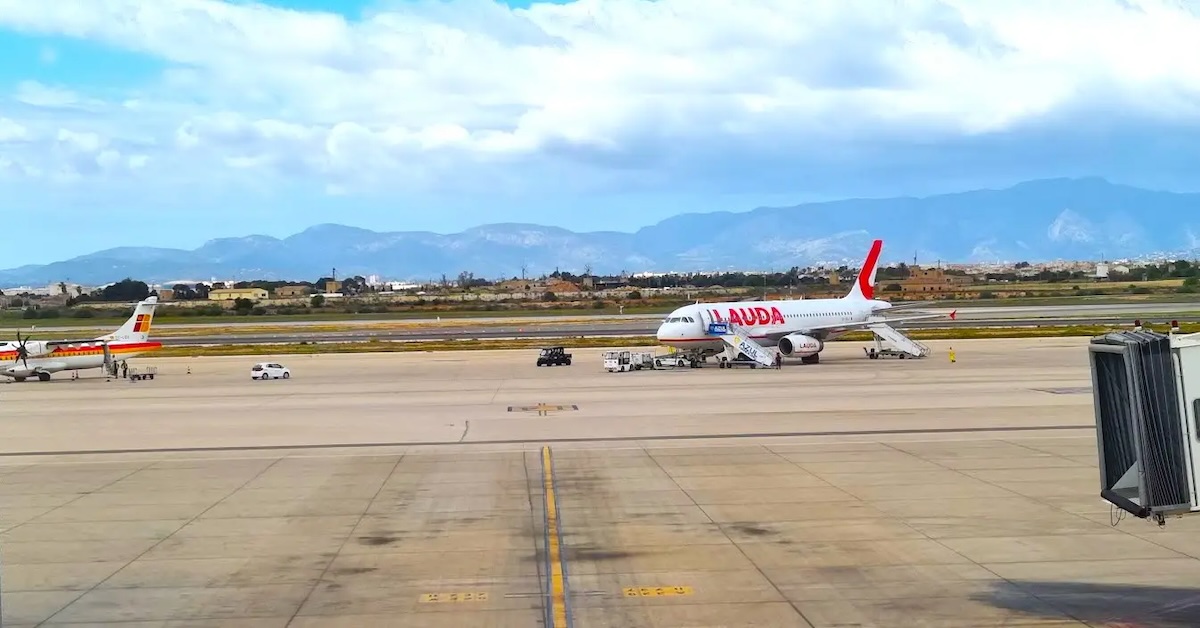

Ryanair recently found itself at the centre of a dispute over major flight disruptions at Palma Airport, attributing the chaos to unfounded weather claims.
The airline has contested the Spanish ATC’s decision to restrict inbound flights, citing clear skies as outbound flights proceeded unaffected.
Ryanair’s Frustration During Palma Airport Disruption
Ryanair has voiced its dissatisfaction following significant flight disruptions at Palma Airport, which were attributed to an unusual weather “phenomenon”. This disruption coincided inconveniently with the beginning of a long weekend public holiday in Spain. Palma Airport cautioned travellers that the surge in passenger numbers, coupled with adverse weather, could result in further delays, advising them to prepare for potential issues.
The Meteorological Perspective
The Spanish Meteorological Agency, Aemet, had issued a red alert for the Balearic Islands, forecasting severe weather including intense rain and storms. Conditions were expected to decline again by Wednesday evening, contributing to the ongoing flight disruptions at Palma. The adverse weather was linked to a meteorological event known as DANA (Depresión Aislada en Niveles Altos).
DANA occurs when a pocket of cold air becomes isolated at high altitudes, interacting with warmer, moisture-rich air as it descends, leading to severe weather phenomena such as heavy rainfall and thunderstorms. Majorca’s geographical location and its warm Mediterranean climate make it particularly susceptible to these events, especially during late summer and autumn seasons.
Ryanair’s Criticism of Air Traffic Control
Ryanair criticised the decision of the Spanish air traffic control service for blocking inbound flights due to ‘non-existent weather issues’. According to the airline, flights departing Palma were unaffected, suggesting inconsistent management of air traffic controls.
Ryanair’s Chief Operations Officer, Neal McMahon, labelled the air traffic control performance this summer as ‘terrible’, highlighting repeated disruptions faced by passengers. He called on Ursula von der Leyen, President of the European Commission, for ATC reforms, underscoring the urgent need for improvements in operational efficiency.
Operational Updates From Palma Airport
An operational update from Palma Airport highlighted the severe impact of evolving weather conditions on flight schedules, with considerable delays reported. The sudden turn in weather, marked by storms and heavy rainfall, posed significant challenges to standard flight operations, causing widespread disruption at the airport.
The operational challenges were compounded by the DANA phenomenon, which often creates substantial rainfall within a short timeframe, occasionally resulting in floods and flash floods. This recurrence at Palma has sparked calls for better contingency planning and infrastructure adaptability during such high-impact weather events.
Impact on Airlines and Passengers
Airlines such as Jet2.com have alerted passengers to further delays due to air traffic control congestions resulting from weather conditions affecting broader European regions. Passengers were advised to brace for possible travel interruptions as the situation evolved.
Ryanair extended apologies to its passengers for the excess delays and cancellations in Majorca, emphasising the difficulty in obtaining timely responses from Spanish air traffic control to reverse restrictive decisions. The airline reiterated its commitment to minimising disruptions despite the external challenges presented.
Calls for Regulatory Reforms
Ryanair’s criticism intensifies calls for regulatory reforms in air traffic control management, emphasising the need for a more robust and flexible framework to handle unexpected weather phenomena. Inconsistencies in flight management during adverse weather underscore the urgency for systemic improvements to safeguard traveller convenience.
The demand for reform is further bolstered by the broader European Commission’s directives, which aim to enhance air traffic systems’ resiliency and adaptability. These developments reflect a growing consensus on the need for comprehensive regulatory updates to mitigate future disruptions.
Conclusion
The ongoing issues at Palma Airport underline the critical interplay between weather phenomena and air traffic management, which necessitates concerted efforts for reforms. As airlines like Ryanair push for change, the focus remains on ensuring smoother operations and enhanced passenger experiences even amidst adverse conditions.
The situation at Palma Airport highlights the importance of addressing air traffic control inefficiencies to prevent unnecessary travel disruptions.
Ryanair’s call for reform underscores the airline industry’s need for reliable and responsive management systems to cope with unpredictable weather events.
