
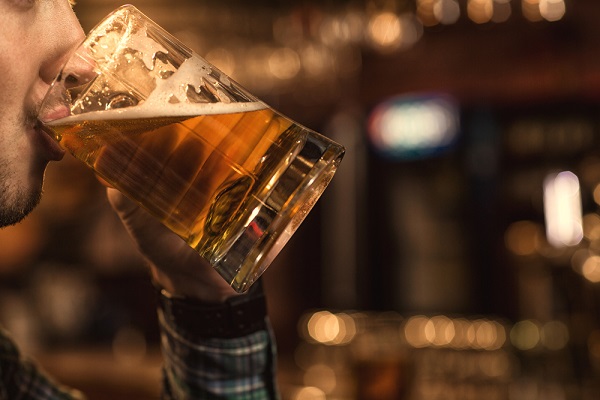

Ryanair CEO Michael O’Leary has proposed a two-drink limit per boarding pass at airport bars to address increasing aggressive behaviour on flights. The initiative aims to mitigate incidents fuelled by alcohol consumption.
Rationale Behind the Proposal
The rise in aggressive incidents on flights has prompted Ryanair’s CEO, Michael O’Leary, to propose a significant change in how alcohol is sold at airports. He suggests a two-drink limit per boarding pass to prevent rowdy behaviour among passengers once they are airborne. O’Leary noted that the combination of alcohol and drugs is a contributing factor to this behaviour, raising concerns about the safety of both passengers and crew.
Challenges in Implementation
O’Leary acknowledged that enforcing such a policy would be complex, requiring a technological solution where airport bar systems can communicate to track alcohol purchases tied to boarding passes.
Despite these challenges, the Ryanair CEO remains adamant that this change is necessary to curb flight disturbances. Airline staff often struggle to identify intoxicated passengers before boarding, especially if they appear capable of walking to the gate, which complicates pre-flight screening efforts.
Airports’ Opposition
Airports have expressed opposition to the proposed measure, arguing that their establishments do not serve visibly intoxicated patrons.
Despite these assurances, O’Leary remains sceptical, pointing to loopholes where relatives of drunken passengers can still purchase alcohol for them. The CEO cited past incidents where passengers mixed alcohol with drugs, leading to severe in-flight confrontations.
Prevailing Measures and Incidents
Ryanair has resorted to more stringent checks, including inspecting cabin bags for illicit alcohol.
Recent legal incidents have highlighted the seriousness of onboard aggression. In one case, a passenger was convicted of assaulting a flight attendant on a Ryanair flight after consuming alcohol, underscoring the need for stricter alcohol control at airports.
Previous incidents have led Ryanair to advocate for a ban on early morning drinking at airport bars, particularly when such drinking precedes flights known for disruptive behaviour. This stance was first publicly called for following disturbances on flights from Dublin to Ibiza.
Implications for Flight Delays
Flight delays exacerbate the issue. Passengers often consume more alcohol when waiting for long periods, as highlighted by O’Leary.
He stated that while one or two drinks might be manageable, extended delays lead to excessive consumption, which causes severe behavioural problems onboard. O’Leary admonished passengers to consider alternative beverages during delays such as coffee or tea, to minimise inebriation-induced disturbances.
Collaborative Efforts and Future Prospects
Ryanair has started collaborating with other airlines to share information about disruptive passengers.
Sinead Quinn, tasked with training Ryanair’s cabin crew, conveyed the difficulty in profiling problem passengers, noting that disturbances can arise from diverse traveller demographics.
The airline is advocating for policy reforms and technological innovations that could collectively help manage and reduce in-flight aggressiveness.
Economic Considerations and Broader Impact
O’Leary also used the opportunity to campaign against the UK’s Air Passenger Duty (APD), suggesting its removal could boost tourism and stimulate the airline industry.
He argued that eliminating the APD would enhance competitiveness and attract more visitors, ultimately benefitting the UK economy.
By implementing a two-drink limit, Ryanair hopes to mitigate growing in-flight disturbances. While challenges to enforcement remain, the airline’s efforts, supported by broader industry cooperation, aim to ensure safer air travel. Ultimately, any such measures will need to gain consensus among various stakeholders, including airport authorities.
