
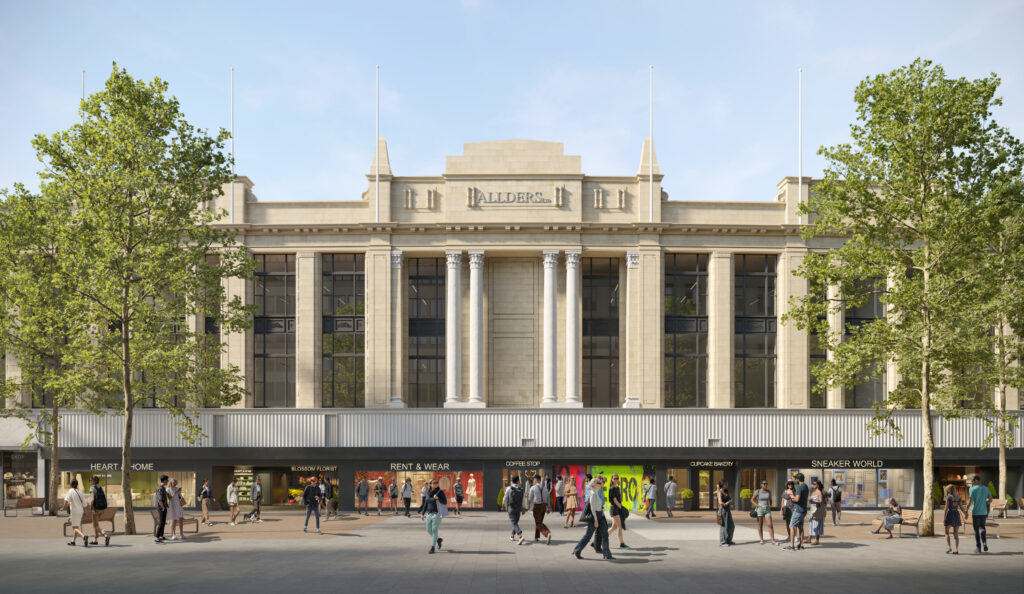

Unibail-Rodamco-Westfield (URW) is leading the transformation of Croydon’s historic Allders building. Planning consent has been granted by Croydon Council, which marks a new chapter for this landmark.
These developments are part of a broader strategy to revitalise Croydon’s economy and urban landscape, preserving heritage while embracing modernity.
Revitalising a Heritage Landmark
Unibail-Rodamco-Westfield (URW), a prominent developer, has received planning consent from Croydon Council to modernise the historic Allders department store in Croydon. The rejuvenation project aims to breathe new life into this cherished landmark, incorporating contemporary retail elements while respecting its architectural heritage.
Founded in 1862, Allders was once a bustling retail hub before closing its doors in 2013 after entering administration. The redevelopment plan involves refurbishing the store’s facade with minimal changes. It introduces five retail units ranging from 450 to 1,300 square feet and two 450-square-foot food and beverage outlets.
A Strategic Urban Renewal
The refurbishment represents the first phase of a broader initiative to revitalise Croydon’s urban landscape. This move is strategic in repositioning Croydon as a vibrant shopping destination amidst significant economic challenges.
According to Penny Cameron, Head of UK Development at URW, “This is the first step of many in our plan to revive this much-loved Croydon landmark, bringing Allders back into use as a space the community can enjoy, while preserving its heritage.”
Challenges and Setbacks in Croydon’s Retail Scene
In 2013, a joint venture between Westfield and Hammerson was launched, intending a £1.4bn redevelopment of the Whitgift and Centrale shopping centres. However, the project has been hampered by delays, financial constraints, and shifts in retail dynamics post-pandemic.
Last year, URW acquired Hammerson’s 50% stake in the Croydon shopping centre project, signalling a pivot in strategy to overcome past hurdles. The acquisition has reignited optimism for economic regeneration in the area.
The mayor of Croydon, Jason Perry, expressed optimism, stating, “We know how much the landmark Allders building means to our residents and businesses, and these plans will help to restore a sense of place and pride in our historic town centre.”
The Impact of Allders’ Revival on Local Economy
Revamping Allders is anticipated to have a substantial impact on the local economy. The introduction of new retail and dining options is expected to draw visitors, stimulate local businesses, and create job opportunities. The ripple effect could revitalise the high street, enhancing Croydon’s commercial appeal.
The focus on preserving historical elements while introducing modern amenities positions the development as a model of blending history with progress, potentially attracting further investments.
Community and Cultural Importance
The Allders building holds significant cultural importance for Croydon. It has been a witness to the town’s evolution over the decades. Its transformation into a modern retail space aims to enhance community identity and pride.
Efforts to maintain the building’s classic architecture while innovating its utility attests to a commitment to honouring Croydon’s past while ensuring its sustainability for future generations.
By integrating such spaces into the community fabric, the redevelopment reinforces the cultural and social fabric of Croydon, making it more than just a shopping destination.
Future Prospects for Croydon’s Development
The redevelopment of Allders is expected to generate a momentum that could catalyse further urban renewal initiatives in Croydon. This could potentially pave the way for further investments and projects focused on enhancing the town’s infrastructure and appeal.
As part of a larger vision, these efforts are expected to realign Croydon’s place within the broader retail landscape of Greater London, turning challenges into new opportunities.
The ambitious refurbishment of the Allders building signals a new era for Croydon, balancing historic preservation with modern development. It sets a precedent for future revitalisation projects.
As the initiative progresses, it promises to enhance Croydon’s economic and social landscape, potentially acting as a catalyst for further regeneration efforts.

