
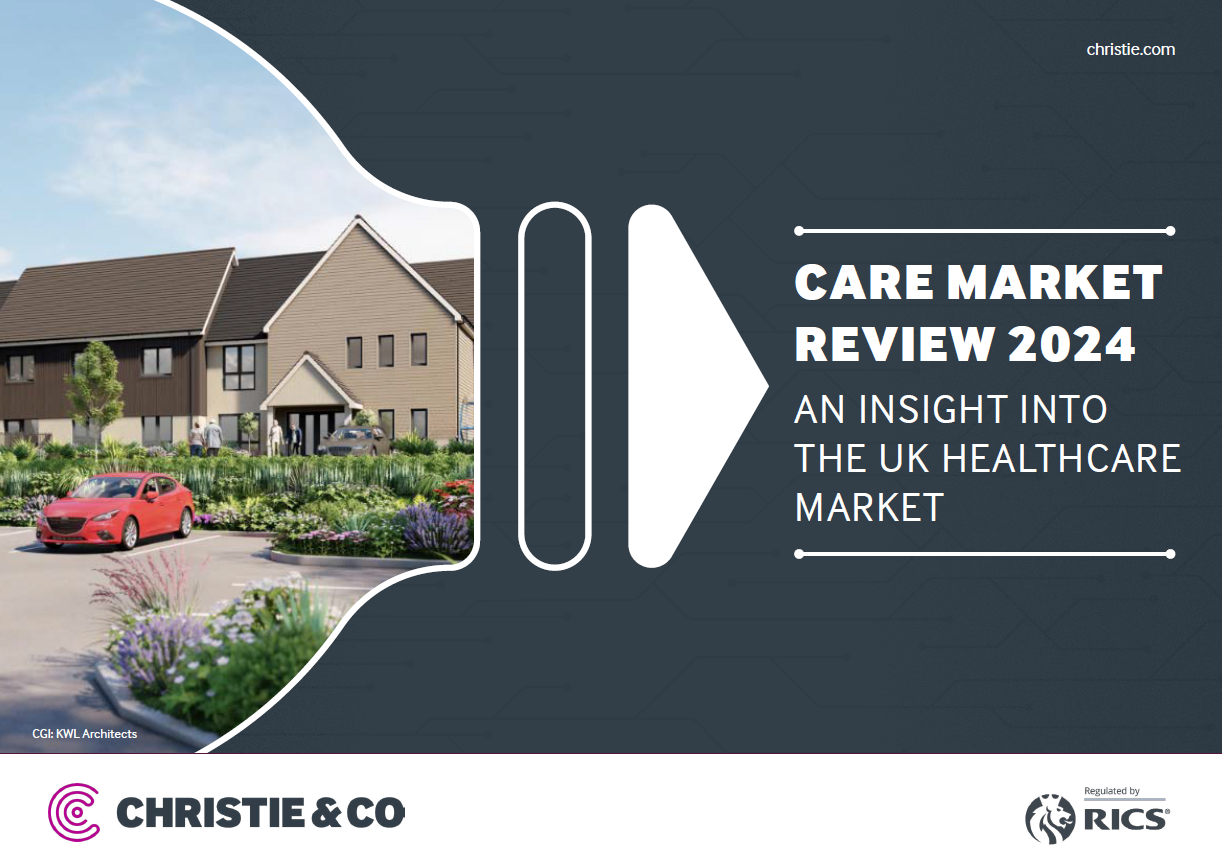

Confidence in the UK’s care sector is on the rise, according to a new report from specialist business property adviser Christie & Co.
The firm’s Care Market Review 2024 highlights a range of factors that are shaping the sector, from capital markets and land development to shifting local authority fee rates and operator sentiment. The report also features a Q&A with Matt Lowe, CEO of LNT Care Developments, and an in-depth analysis of the German healthcare market.
Capital Markets: Care Sector Remains Attractive Despite High Borrowing Costs
Christie & Co points to the care sector’s defensive characteristics and needs-driven demand as key reasons it remains a highly attractive asset for investors. However, the rising cost of capital has posed challenges. The report notes that the Bank of England base rate climbed from 3.5% at the start of 2023 to 5.25% by the year’s end, driven by broader inflationary pressures. Other key financial indicators, such as 10-year UK government bond yields, also rose to 4.6% in August 2023.
However, as 2024 progresses, Christie & Co observes that market yields have stabilised, with increasing investment activity. More funds are now actively entering the market, buoyed by new capital and growing interest in corporate and private equity transactions, signalling renewed confidence.
Land Development: Planning Challenges Continue, But Confidence Returns
The UK’s planning system remains a source of frustration for care home developers, according to the report, as local-level political considerations and under-resourced planning departments slow down approvals. Additionally, new planning policies such as Biodiversity Net Gain (BNG) and regulations around nitrate neutrality are adding cost and complexity. However, Christie & Co reports that after a period of inflation, construction costs are stabilising, giving developers greater confidence.
Land values in the care sector have fared better than other property markets, with operators recognising the value of consented development sites. Despite supply being constrained by planning hurdles, there is an uptick in purpose-built senior housing developments. While most new projects have focused on the luxury or affordable ends of the market, new entrants are targeting the mid-market segment to meet growing demand. Integrated Retirement Communities (IRCs) are also becoming more popular, with an increasing number of larger schemes gaining approval.
Transaction Trends: Larger Care Homes in Demand
Transactional data from Christie & Co reveals a growing appetite for larger care home assets. In the first half of 2024, 58% of care home sales involved properties with over 40 beds, up from 52% in 2023. Meanwhile, sales of smaller homes with fewer than 20 beds accounted for just 11%, a figure consistent with previous years.
Notably, new entrants are playing a bigger role in the sector, with 9% of transactions in the first half of 2024 involving buyers new to the market – more than double the proportion seen in 2023. Small and medium-sized care groups have been the most active buyers, making up 33% of transactions, while deals involving larger groups have fallen, reflecting a softening of yields and reduced activity in the sale-and-leaseback market.
Local Authority Fees: Inflation Erodes Gains
Christie & Co’s analysis of local authority fee rates shows modest increases, with residential fees rising by an average of 9% in England in 2023/24, slightly below the previous year’s 9.5% increase. However, inflationary pressures have diminished the impact of these rises, and many operators expect to pass on some of the financial burden to privately funded clients, where fee increases have ranged between 5% and 10%.
Operator Sentiment: Expansion Plans Amid Uncertainty
A survey conducted by Christie & Co found that 60% of care operators reported a reduction in agency staffing costs over the last year, although 13% noted an increase in agency usage. Private fee rates have generally risen across the UK, with around 60% of operators reporting fee increases between 5% and 10%. In England and Scotland, over 40% of care operators are looking to expand their portfolios, while in Wales, 67% of providers plan to acquire more sites in the next 12 months.
Despite this optimism, uncertainty around interest rates has left some operators cautious, with a quarter of respondents unsure about their future plans.
Finance Landscape: Rising Demand for Refurbishment Loans
The report also highlights a growing demand for finance in the care sector, particularly for refurbishment projects. Christie Finance reports a 23% increase in transactions in the first half of 2024, with more operators seeking unsecured business loans and asset finance to fund improvements. Lenders are generally optimistic about the UK economy, with 65% expecting growth over the next year, though regulation and client income remain key challenges.
Richard Lunn, Managing Director of Care at Christie & Co, commented, “There is a renewed appetite from both buyers and investors, driving strong transactional activity. However, longer deal times are being observed, driven by regulatory and insurance challenges. The upcoming Budget in October could further influence market dynamics, particularly with changes to inheritance and capital gains taxes.”
Read the full Care Market Review 2024 report.
