
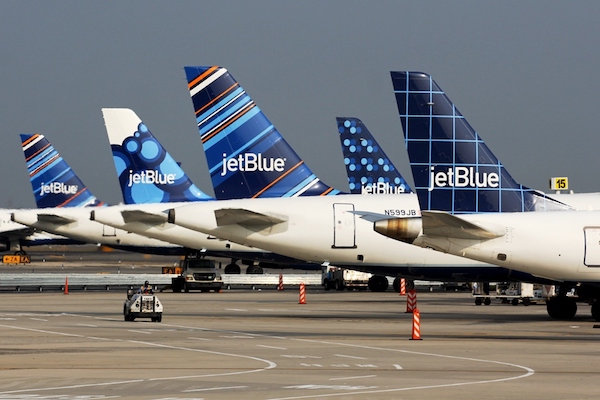

JetBlue has called off its $3.8 billion merger with Spirit Airlines following significant legal obstacles. The merger, initially aimed at disrupting the US airline industry, faced a judge’s ruling deeming it anti-competitive.
The proposal’s withdrawal came after both airlines mutually agreed on the challenges of securing legal approvals by their deadline. This decision reshapes JetBlue’s strategic outlook as it plans for future growth independently, focusing on enhancing its market presence and financial health.
Background to the Merger
The proposed $3.8 billion merger between JetBlue and Spirit Airlines was initially seen as a groundbreaking attempt to shake up the US airline industry. It aimed to create a new national low-cost competitor to challenge the dominance of the ‘Big Four’ airlines. This vision was proposed with the intention of offering passengers more affordable options while enhancing service quality across the board. However, concerns over market competitiveness and monopolistic practices began to emerge, eventually leading to legal scrutiny.
Legal Challenges and Termination
The merger faced significant legal challenges when it was blocked by a judge who deemed the combination potentially anti-competitive. Both JetBlue and Spirit Airlines filed an appeal, hoping to overturn the decision and proceed with their merger plans. Despite these efforts, doubts over obtaining the necessary legal and regulatory approvals by the self-imposed July 24 deadline led to both parties mutually agreeing to terminate the merger. This decision, while disappointing to both airlines, underscores the complexities involved in navigating regulatory landscapes.
Statements from JetBlue
JetBlue’s Chief Executive, Joanna Geraghty, expressed the airline’s steadfast belief in the merger’s benefits. She stated, “We believed this merger was worth pursuing because it would have unleashed a national low-fare, high-value competitor to the ‘Big Four’ airlines.” Geraghty acknowledged the hard work done with Spirit to plan a strategic vision but admitted the obstacles were too significant to overcome in the current climate. As a result, JetBlue has decided to move forward independently, focusing on leveraging its unique market position and strengths.
Financial Implications
As part of the termination agreement, JetBlue will pay Spirit Airlines $69 million. This payment reflects the costs incurred during the attempted merger, demonstrating the substantial financial commitment both parties had invested in the proposal. JetBlue now aims to refocus on its core strengths, such as deepening network relevance and better segmenting product offerings. By doing so, JetBlue seeks to enhance its competitive edge and improve profitability, even without the merger’s perceived advantages.
JetBlue’s Strategic Refocus
In light of the merger’s termination, JetBlue has outlined a comprehensive plan to boost its performance. The company intends to pursue multiple near-term revenue initiatives throughout 2024, including expanding distribution and partnerships, improving loyalty programme functionality, and enhancing network and ancillary services. These initiatives are projected to generate over $300 million in revenue benefits. Additionally, JetBlue plans to implement cost-saving measures, including $175 million-$200 million from cuts and $75 million from modernising its fleet, aiming to approach break-even operating margins.
Future Prospects for JetBlue
JetBlue’s future strategies emphasize rebuilding its long-term organic planning with a focus on sustained profitability for its stakeholders. The airline is committed to delivering meaningful cost savings and revenue enhancements, positioning itself as a strong independent competitor in the US market. More insights into JetBlue’s forward-looking business plans are expected to be disclosed at an investor meeting on May 30. This meeting will provide stakeholders and industry observers a clearer picture of JetBlue’s strategic direction following the failed merger.
Industry Impact
The development is significant for the broader US airline industry, highlighting the challenges and intricacies of merger attempts in a competitive market. The decision to shelve the merger may influence how other airlines approach potential consolidations, taking into account regulatory hurdles and market reactions. The situation underscores the delicate balance required to innovate and compete without compromising market health and consumer interests.
The termination of the JetBlue and Spirit merger underscores the complexities of navigating legal and regulatory frameworks when attempting industry-shaping deals. While this marks a significant shift, it opens a new chapter for JetBlue to strengthen its independent market strategies.
As JetBlue moves forward, the broader industry will be watching closely, gauging the potential shifts in competitive dynamics and regulatory approaches in future merger attempts.
