
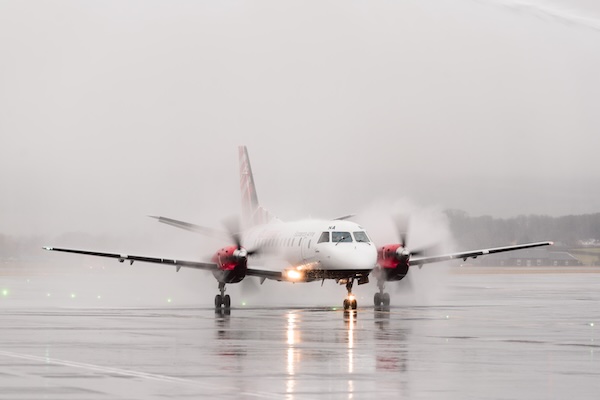

Loganair has concluded its final service using its fleet of Saab 340 aircraft. This momentous event marks the culmination of over two decades of reliable service in Scotland’s aviation landscape.
The airline is now transitioning to a more modern fleet, intending to boost operational capacity and efficiency through the introduction of ATR turboprop aircraft.
Final Saab 340 Flight Marks End of an Era
Loganair has concluded its final flight using the Saab 340 aircraft, marking the end of a significant chapter in its aviation history. The retirement of these ‘workhorse’ planes follows over 24 years of dedicated service, during which they were indispensable in connecting Scotland’s remote islands with the mainland. The decision to phase out the Saab 340 was driven by the company’s commitment to modernise its fleet with more efficient and larger capacity aircraft.
The Saab 340s have been a staple in Loganair’s fleet, famously known for their reliability and capability to handle the challenging routes across Scotland’s rugged terrain. These aircrafts were integral in carrying passengers, cargo, and even postal services, crucially supporting island communities. Over their tenure, Loganair’s 18 Saab 340s successfully completed over 430,000 flights, transporting more than eight million passengers.
Transition to Modern ATR Turboprops
With the phasing out of the Saab 340, Loganair is introducing ATR turboprop aircraft to its fleet. This strategic transition is intended to enhance operational efficiency and provide up to 45% more seating capacity on certain routes. The ATR aircraft not only offer increased space and comfort for passengers but also promise improved fuel efficiency, aligning with modern aviation’s sustainability goals.
The move to ATR turboprops is also expected to bolster Loganair’s operational resilience. With a broader pool of pilots available to operate these aircraft, the airline anticipates improved scheduling flexibility and reduced disruptions. This transition is a critical step for Loganair in maintaining competitive edge and service reliability amidst growing demands and environmental considerations.
A Tribute to Chairman Eddie Watt
Loganair’s final flight of the Saab 340 was piloted by the esteemed Captain Eddie Watt. A pivotal figure in the airline, Captain Watt has dedicated nearly three decades of service, effectively shaping Loganair’s reputation for safety and reliability. His retirement coincides with the farewell of the Saab 340, adding a personal note to this historical moment.
Captain Watt joined Loganair in 1996 and quickly became synonymous with the Saab 340’s legacy. His long-standing commitment to the airline and its passengers has made a lasting impact, ensuring high standards in every operation. As he embarks on retirement at 65, Loganair celebrates his remarkable contributions, which have been pivotal in defining the airline’s success.
Loganair’s Impact on Scottish Communities
During its operational period, the Saab 340 fleet played a critical role in linking remote Scottish islands with the mainland, providing essential connectivity that facilitated both travel and commerce. This connectivity was not only vital for residents but also for businesses, ensuring that supplies and goods were consistently available, thus supporting local economies.
The aircraft ensured that essential supplies such as food, newspapers, and mail reached island communities. It also boosted tourism by making these destinations more accessible, which in turn helped generate revenue for the local economy. The operational strategy of using Saab 340s exemplified Loganair’s commitment to serving isolated areas, thus reinforcing its status as a crucial lifeline for many.
A Forward-Looking Fleet Strategy
Loganair’s decision to replace the Saab 340s with ATR turboprops is a forward-looking strategy aimed at future-proofing its operations while maintaining service quality. The ATR aircraft’s enhanced capabilities align well with the increasing demand for air travel within the region and are expected to support Loganair’s expansion goals.
This fleet upgrade not only reflects a shift in operational priorities but also underscores Loganair’s adaptability in a dynamic aviation environment. The airline’s focus on sustainability and efficiency positions it to meet future challenges while continuing to deliver reliable services to its customers. The introduction of the ATR fleet marks a promising evolution in Loganair’s operational journey.
The Enduring Legacy of the Saab 340
The Saab 340s have left an indelible mark on Scottish aviation, symbolising resilience and dependable service. Their legacy is not just in numbers but in the crucial role they played in creating connectivity and fostering community growth.
Despite their retirement, the memory of these aircraft continues to resonate with both passengers and employees who experienced their service. This legacy highlights the impact of aviation in binding remote geography and providing essential services, a role now to be taken over by the advanced ATR fleet.
The retirement of the Saab 340 signifies both an end and a beginning for Loganair. As the airline embraces newer technologies, its legacy of connecting communities continues to evolve.
This transition is a testament to Loganair’s commitment to innovation and service, ensuring reliable connectivity for Scotland’s remote areas. The future looks promising with the new ATR fleet taking flight.
