
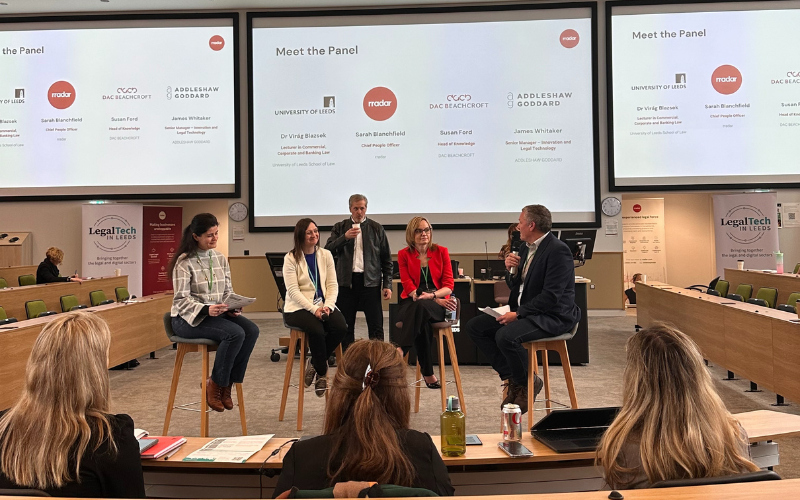

The LegalTech in Leeds conference highlighted the dynamic merger of digital and legal sectors.
- AI was a central theme, with speakers discussing its impact on the legal industry.
- Key discussions centered on AI’s integration, regulation challenges, and future implications.
- The event served as a platform for experts to express varied views on AI’s role in law.
- Client-centric technology advancements were also emphasised, underscoring technology’s broader effect.
The third annual LegalTech in Leeds conference showcased the intersection of digital innovation and law in the Northern region. Held on 16 April at the University of Leeds and organised by Whitecap Consulting, the event featured keynote speeches and panel discussions from leading figures in the UK LegalTech sector. Renowned speakers such as Beth Fellner of Legal Geek and Gary Gallen, CEO of rradar, shared their insights.
AI emerged as a dominant topic throughout the day’s events. Julian Wells of Whitecap Consulting noted the increasing interest and usage of AI within the legal domain. Hilary Smyth-Allen from SuperTech WM commented on the prevalence of software marketed as AI, predicting a surge in startups using genuinely AI-driven solutions tailored for legal applications. The discussions highlighted an urgent need for the legal industry to adapt its regulatory framework to keep pace with technological advancements.
Katie Atkinson from LawTech UK addressed the discrepancy between AI’s rapid adoption and the slower pace of regulatory development. She emphasized that AI’s presence in law predates its recent hype, marking a shift from mere curiosity to a crucial element within legal practices. Panelists deliberated on how established firms and startups are differently engaging with AI, with the former scrutinising its appropriate scope and the latter innovating to harness AI’s potential for efficiency.
The potential of AI to replace human roles was extensively debated, but consensus leaned towards AI as a complementary tool rather than a replacement. Thea Hewison-Robson of Walker Morris stressed the indispensability of empathy and human judgment in legal proceedings, areas where AI falls short. David Nash of Dye & Durham highlighted the generational shift, asserting that new professionals would drive LegalTech adoption and optimisation, valuing practical and effective technologies over traditional constraints.
A significant portion of the conference also focused on AI’s impact on clients. Dr. Jessica Guth from Leeds Trinity University critiqued the technology-first approach, advocating for a client-centered perspective when adopting new tools. Adam Roney of Calls9 discussed the evolving client-lawyer dynamics, where readily accessible information requires lawyers to enhance their relational value. This evolution affirms that while technology can streamline processes, the human element remains fundamentally irreplaceable.
The LegalTech in Leeds conference underscored the pivotal role of AI in reshaping the legal and client service landscapes.
