
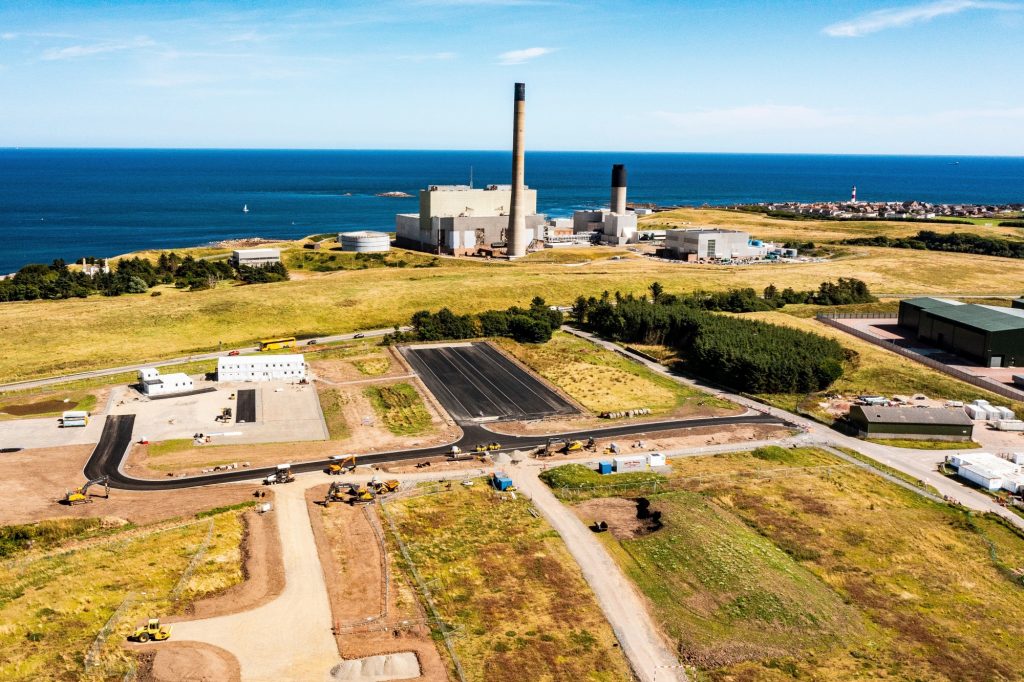

Ofgem has sanctioned a colossal £3.4bn investment for the England-Scotland offshore HVDC link, marking the UK’s largest electricity transmission project to date.
- This undertaking is a joint effort by SSEN Transmission and National Grid, envisioned as an ‘electricity superhighway’.
- The project encompasses 506km of cable from Peterhead to Drax, designed to enhance grid capacity and support renewable energy.
- The Accelerated Strategic Transmission Investment framework ensures rapid project funding, facilitating quicker adaptation to energy needs.
- The move is significant amid the geopolitical energy landscape, reducing reliance on volatile international gas markets.
In a monumental decision, Ofgem has green-lit public funding totalling £3.4bn for the Eastern Green Link 2 (EGL2), marking the largest electricity transmission project ever undertaken in the UK. This ambitious project, described as an ‘electricity superhighway’ by Ofgem, is a collaborative venture between SSEN Transmission and National Grid. It forms part of SSEN’s £20bn Pathway to 2030 programme and National Grid’s ‘The Great Grid Upgrade’, which includes numerous substantial infrastructure projects.
The EGL2 project entails the installation of a 506km high-voltage direct current cable, extending from Peterhead in Aberdeenshire to Drax in North Yorkshire, with 436km submerged beneath the North Sea and 70km laid underground onshore. It necessitates the construction of four converter stations, two at each endpoint, to integrate the transmitted electricity into the grid. The cable specifications boast 525kV and 2GW capacity, capable of supplying power to two million homes, a significant boost to the energy infrastructure.
Crucially, this project is the pioneer among the 26 initiatives funded through Ofgem’s Accelerated Strategic Transmission Investment (Asti) framework. Asti is designed to hasten funding approval by up to two years, responding to the urgent need for enhanced grid capacity driven by the burgeoning supply of low-carbon electricity from Scotland’s offshore wind farms and increased demand in southern England due to trends like electric vehicles and railway electrification.
By augmenting grid capacity with EGL2, Ofgem projects £1.5bn in savings through reduced compensations to wind energy producers, previously required to curtail production during periods of excessive wind due to insufficient grid capacity. This project not only aligns with governmental clean energy goals for 2030 but also aims to lessen dependency on unstable international gas markets, further highlighted by the geopolitical tensions involving Russia and Ukraine.
Notably, Ofgem indicated that while initial public funding was cited at £3.4bn, the JV partners argue the inflation-adjusted investment is closer to £4.3bn. In scrutinising project costs, Ofgem identified £79M in savings, cutting unnecessary expenditures, thus streamlining project implementation without compromising quality or delivery timelines.
Commendations from project director Ricky Saez and SSEN Transmission emphasise the critical role of EGL2 in energy security and its economic contributions, including substantial employment opportunities. Additionally, the project’s legacy promises to extend beyond energy, enhancing community initiatives and environmental well-being. Emphasised by Ofgem CEO Jonathan Brearley, EGL2 exemplifies regulatory diligence aimed at advancing the UK’s clean energy agenda efficiently.
The EGL2 initiative is not just a crucial infrastructural advancement; it represents a significant strategic shift within the UK’s energy policy landscape, showcasing the dedication to achieving net-zero targets while ensuring robust, modernised energy systems are in place. The project’s approval underscores the UK’s intent to position itself as a leader in clean energy, reducing its carbon footprint and fortifying energy independence in tumultuous times.
The EGL2 project is a pivotal advancement for the UK’s energy infrastructure, signalling a transformative step towards sustainable and secure energy solutions.

