
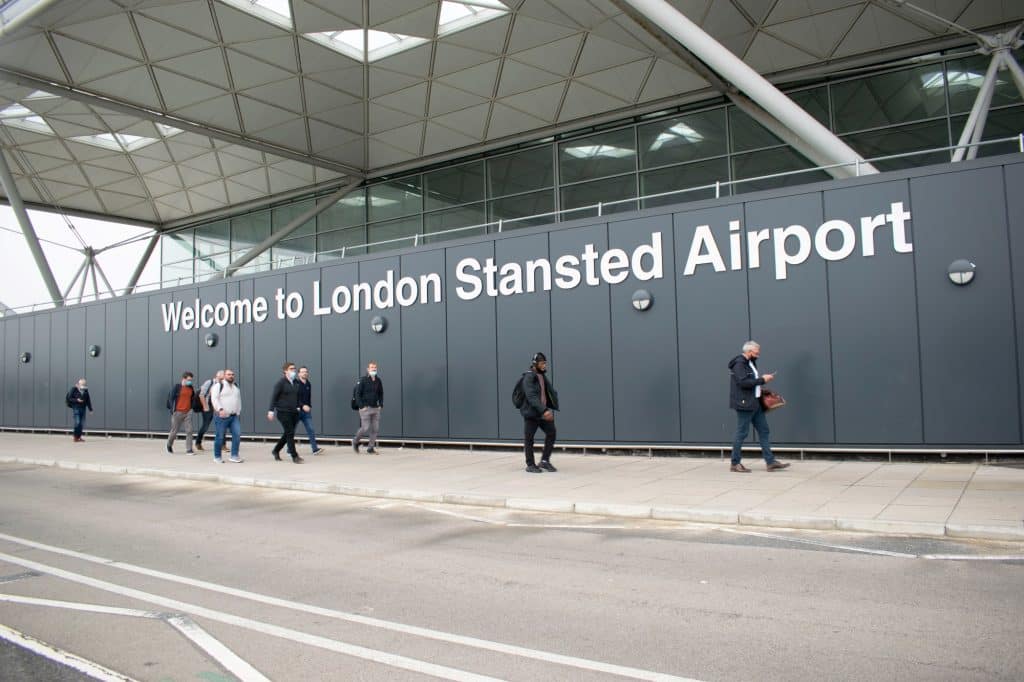

The UK government has welcomed a significant financial boost for the expansion of London Stansted Airport, aiming to enhance its infrastructure and capacity.
- A substantial injection of £1.1bn by Manchester Airports Group will create 5,000 jobs, benefiting supply chains and the UK’s economic standing.
- The funding will be divided between expanding and improving the airport’s terminals, paving the way for increased passenger capacity.
- Climate activists express concern over environmental implications, highlighting potential contradictions with climate commitments.
- The airport expansion aligns with broader plans across the UK to grow aviation infrastructure responsibly.
The UK government has announced its approval of a £1.1bn investment in London Stansted Airport, marking a pivotal development in the nation’s aviation sector. The transport secretary, Louise Haigh, emphasised that this funding, introduced at the Investment Summit in London by the Manchester Airports Group (MAG), is an indication of Britain’s proactive stance in promoting business growth. Such initiatives are expected to generate employment and strengthen the UK’s position on the global stage.
This financial commitment is meticulously structured over a five-year period, with £600M allocated for the expansion of the airport’s terminal, and the remaining £500M dedicated to enhancements of the current terminal facilities and surrounding infrastructure. The planned expansion aims to increase the terminal’s size by a third, unlocking the runway’s full potential and establishing new travel routes. This comes after Stansted recorded an unprecedented 29 million annual passengers, with ambitions to reach 43 million.
A significant infrastructure upgrade is envisaged, including the construction of a larger security hall, modernised gate rooms, and an upgraded airfield taxiway. A noteworthy addition is the 14.3MW solar farm, intended to meet the airport’s extensive energy needs sustainably. As MAG moves into the final stages of the procurement process, construction is anticipated to commence in 2025, with completion aimed within two to three years.
Despite the infrastructure advancements, the expansion has been met with opposition from environmental groups. Paul Morozzo from Greenpeace UK warns that without moderating aviation demand, the expansion may become either a ‘stranded asset’ or contribute to climate emissions counteractive to the government’s green ambitions. Similarly, George Monbiot highlights that airport expansion exacerbates climate challenges, questioning its alignment with public and environmental well-being.
While these environmental concerns persist, the expansion forms part of a broader government strategy, such as the Jet Zero initiative, which envisions a decarbonised aviation sector by 2050, endorsing justified airport expansion plans. With Stansted leading the charge, other airports, including London City, Luton, Heathrow, and Gatwick, are similarly advancing their expansion agendas, ensuring alignment with sustainability objectives.
The expansion of London Stansted Airport marks a defining step in advancing UK aviation infrastructure amidst economic and environmental challenges.

